Showing posts with label good vs. evil. Show all posts

Jul 13, 2025

John Foster Dulles on the military establishment's need for external enemies

In order to bring a nation to support the burdens incident to maintaining great military establishments, it is necessary to create an emotional state akin to war psychology.  There must be the portrayal of an external menace or of internal conditions rendered intolerable by the unjust restraints of foreign nations.  This involves the development to a high degree of the nation-hero nation-villain ideology and the arousing of the population to a sense of the duty of sacrifice.

~ John Foster Dulles, "War, Peace and Change"

John Foster Dulles: The devil's (not) in the details | Acton Institute 

Jun 29, 2025

Hannah Arendt on the choice between good and evil

The sad truth is that most evil is done by people who never make up their minds to be good or evil.

~ Hannah Arendt, The Life of the Mind, "Thinking" (1977)


May 22, 2024

Lew Rockwell on Hitler's modest plans before 1939

The neocon efforts to demonize the enemy are nothing new, and in what follows, I’m going to discuss a number of examples to show how pervasive this pattern has been in involving America in unnecessary, destructive, and costly wars. 

Let’s begin with the most salient case of all.  For the neocons, it’s always Hitler.  The Munich Conference of 1938 shows what happens when we fail to stand up against evil.  The facts don’t bear out what they say.  Hitler was indeed an evil dictator, but America had no valid reason to go to war against him.  Hitler did not aim to attack the United States, and fighting against him helped Stalin, who killed more people than Hitler did, in taking control of Eastern Europe. 

Furthermore, Hitler’s policies during the 1930s aimed at the peaceful revision of the punitive and unjust Treaty of Versailles.  A European War resulted only after the unwise and unenforceable British and French guarantee of the Western boundary of Poland.  The eastern boundary against Russia was not guaranteed, and Poland lost territory to Russia after the Russians invaded Poland on September 17, 1939. 

The great Murray Rothbard notes that Hitler’s policy before 1939 was improvised, responding to particular circumstances.  He did not have a plan for “world conquest” as the neocons continue to allege today.  “Hitler was not bent on world conquest, for which he had armed Germany to the teeth and constructed a ‘timetable.’  Hitler, in brief, (in foreign affairs) was not a uniquely evil monster or daimon, who would continue to gobble up countries diabolically until stopped by superior force.  Hitler was a rational German statesman, pursuing — with considerable intuitive insight — a traditional, post-Versailles German policy (to which we might add intimations of desires to expand eastward in an attack on Bolshevism).  But basically, Hitler has no ‘master plan’; he was a German intent, like all Germans, on revising the intolerable and stupid Versailles-diktat, and on doing so by peaceful means, and in collaboration with the British and French.  One thing is sure: Hitler had no designs, no plans, not even vague intimations, to expand westward against Britain and France (let alone the United States).”

~ Lew Rockwell, "Good vs. Bad Nations," LewRockwell.com, May 22, 2024

May 20, 2024

Lew Rockwell on how the good vs. evil paradigm has been applied to the Civil War

After the end of World War II, the good versus evil nations paradigm was applied to the War Between the States as well.  Before 1939, the dominant interpretation of the war stressed national reconciliation.  Historians such as Avery Craven saw the war as an unnecessary conflict brought about by errors and intransigence on both sides.  The foremost American historian of the time, Charles A, Beard, saw the war primarily in economic terms, as a conflict between the industrialized North and the agricultural South.  In the new view, by contrast. as expressed in a pioneering article, “The Causes of the Civil War” by the ardent New Dealer Arthur M. Schlesinger, Jr. in Partisan Review (1949), the war was seen as a Manichean struggle in which the heroic Abraham Lincoln battled the evil slave power. 

The neocons have continued the demonization of the South today, e.g., by campaigning to destroy all Confederate monuments and by rooting out any sympathy for the Confederate cause in history textbooks.  General Robert E. Lee, once a national icon, is now reviled, and Abraham Lincoln, who bears primary responsibility for a horrendous war and for the growth of the Leviathan state, is treated as a virtual demigod. 

As the great Tom DiLorenzo, the president of the Ludwig von Mises Institute has pointed out, Lincoln’s motive for war on the South was not the eradication of slavery—he urged the adoption of the Corwin Amendment, which would have guaranteed non-interference with slavery in place where it then existed—but the continued collection of tariffs, the principal source of the federal government’s tax revenues, Secession, he thought, must be forcibly suppressed to secure this vital source of revenue.  As DiLorenzo says, “Lincoln then threw down the gauntlet in his first inaugural: ‘The power confided in me,’ he said, ‘will be used to hold, occupy, and possess the property, and places belonging to the government, and to collect the duties and imposts; but beyond what may be necessary for these objects, there will be no invasion–no using force against, or among the people anywhere.’ 

‘We are going to make tax slaves out of you,’ Lincoln was effectively saying, ‘and if you resist, there will be an invasion.’  That was on March 4.  Five weeks later, on April 12, Fort Sumter, a tariff collection point in Charleston Harbor, was bombarded by the Confederates.  No one was hurt or killed, and Lincoln later revealed that he manipulated the Confederates into firing the first shot, which helped generate war fever in the North.”  See this

Mark Thornton and Robert B. Ekelund, Jr., in their excellent book Tariffs, Blockades, and Inflation have also made a strong case that tariffs were the primary cause of the war.

~ Lew Rockwell, "The Myth of Good and Bad Nations," LewRockwell.com, May 20, 2024


Jan 14, 2024

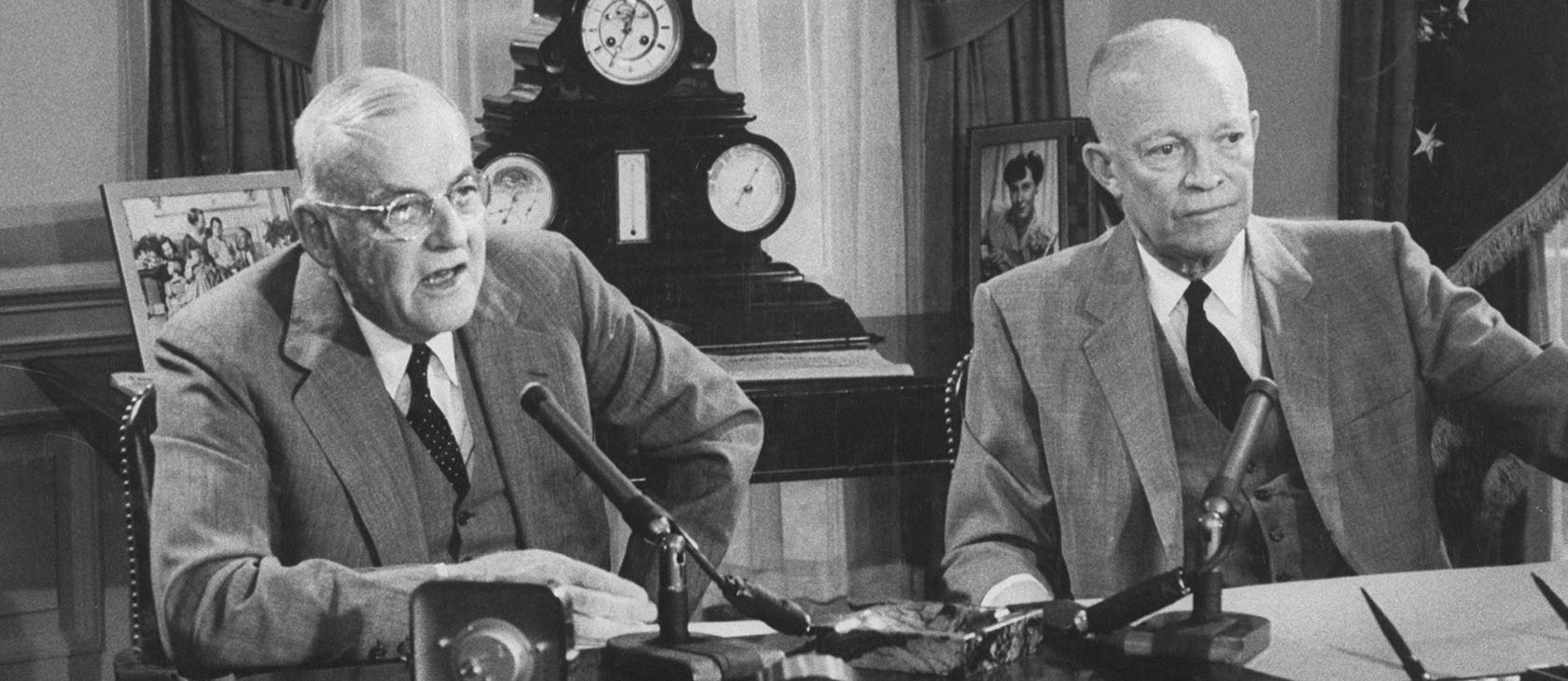
George Kennan on the false "good vs. evil" narrative

In this day of another great political-emotional preoccupation, when the image of the Soviet Union leaders has replaced that of Hitler in so many Western minds as the center and source of all possible evil, it is perhaps particularly desirable that we should remember these things.  Let us not repeat the mistake of believing that either good or evil is total.  Let us beware, in future, of wholly condemning an entire people and wholly exculpating others.  Let us remember that the great moral issues, on which civilization is going to stand or fall, cut across all military and indeological borders, across peoples, classes, and regimes - across, in fact, the make-up of the human individual himself.  No other people, as a whole, is entirely our enemy.  No people at all - not even ourselves - is entirely our friend.

~ George Kennan, Russia and the West Under Lenin and Stalin, Chapter 23: "Russia and the West as Allies," p. 369

1961


Nov 9, 2020

William Ryan on evil

To persuade a good and moral man to do evil...it is not necessary first to persuade him to become evil.  It is only necessary to teach him that he is doing good.

~ William Ryan, Blaming the Victim (1971)


Dec 4, 2019

Ben Shapiro on the progressive worldview of wealth, inequality, virtue and evil

No one is a better person just because they're poor.  By the way, no one's a better person because they're rich.  All that wealth is is a measure of voluntary exchanges you engaged in in a free market.  That's all that wealth is.  But the idea for the Left is that all inequality is evil, therefore the people who are unequal at the top are evil and the people at the bottom are virtuous.  Which is why you'll hear people on the Left say things like they like small business, but they hate people who are big business like the Wal-Mart family, the Walton family.  They're terrible.  Well were they terrible when they were just a family living in the middle of nowhere?  When exactly did they transition over into evil?  When they became successful enough.  Because their success meant, by necessity, according to the leftist worldview, they were depriving others of their fair share.

~ Ben Shapiro, "Ben Shapiro EDUCATES College Professors in an Epic Q & A," YouTube, 18:38 mark, before 2016 presidential election (posted July 24, 2019)

Jun 27, 2019

Mahatma Gandhi on good vs. evil

When I despair, I remember that all through history the way of truth and love have always won. There have been tyrants and murderers, and for a time, they can seem invincible, but in the end, they always fall. Think of it--always.

~ Mahatma Gandhi

Mahatma Gandhi