~ Ludwig von Mises, Socialism, p. 268
Showing posts with label books - Socialism. Show all posts
Dec 28, 2023
Ludwig von Mises on the historical struggle between free trade and imperialism
History is a struggle between two principles, the peaceful principle, which advances the development of trade, and the militarist-imperialist principle, which interprets human society not as a friendly division of labour but as the forcible repression of some of its members by others.
May 31, 2021
Ludwig von Mises on war and peace
War...is harmful, not only to the conquered but to the conqueror. Society has arisen out of the works of peace; the essence of society is peacemaking. Peace and not war is the father of all things. Only economic action has created the wealth around us; labor, not the profession of arms, brings happiness. Peace builds, war destroys.
~ Ludwig von Mises, Socialism (1922)
Labels:
books - Socialism,
civilization,
peace,
people - Mises; Ludwig von,
war
Jun 3, 2020
Ludwig von Mises on mass unemployment providing recruiting ground for radical political movements
Permanent mass unemployment destroys the moral foundations of the social order. The young people, who, having finished their training for work, are forced to remain idle, are the ferment out of which the most radical political movements are formed. In their ranks the soldiers of the next revolution are recruited.
~ Ludwig von Mises, Socialism
Sep 23, 2018
Ludwig von Mises on feminism
So far as Feminism seeks to adjust the legal position of woman to that of man, so far as it seeks to offer her legal and economic freedom to develop and act in accordance with her inclinations, desires, and economic circumstances—so far it is nothing more than a branch of the great liberal movement, which advocates peaceful and free evolution. When, going beyond this, it attacks the institutions of social life under the impression that it will thus be able to remove the natural barriers, it is a spiritual child of Socialism. For it is a characteristic of Socialism to discover in social institutions the origin of unalterable facts of nature, and to endeavour, by reforming these institutions, to reform nature.
~ Ludwig von Mises, Socialism
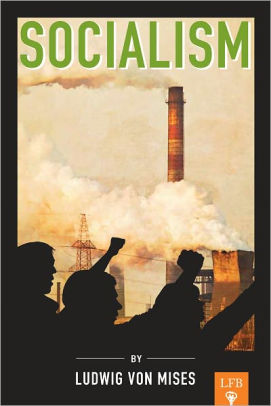
Dec 4, 2011
Ludwig von Mises on civilization and cooperation
Civilization is a work of peaceful co-operation.
~ Ludwig von Mises, Socialism
Sep 13, 2009
Ludwig von Mises on socialism
In the socialist commonwealth every economic change becomes an undertaking whose success can be neither appraised in advance nor later retrospectively determined. There is only groping in the dark. Socialism is the abolition of rational economy.
~ Ludwig von Mises, Economic Calculation in the Socialist Commonwealth, p. 26
May 7, 2008
Ludwig von Mises on romanticism
The romantic and the social art of the nineteenth century have prepared the way for socialist destructionism. Without the help it got from this direction Socialism would never have gained its hold on people's minds.
Romanticism is man's revolt against reason, as well as against the condition under which nature has compelled him to live. The romantic is a daydreamer; he easily manages in imagination to disregard the laws of logic and of nature. The thinking and rationally acting man tries to rid himself of the discomfort of unsatisfied wants by economic action and work; he produces in order to improve his position. The romantic is too weak—too neurasthenic—for work; he imagines the pleasures of success but he does nothing to achieve them. He does not remove the obstacles; he merely removes them in imagination. He has a grudge against reality because it is not like the dream world he has created. He hates work, economy, and reason.
~ Ludwig von Mises, Socialism (1922), Chapter 33
Romanticism is man's revolt against reason, as well as against the condition under which nature has compelled him to live. The romantic is a daydreamer; he easily manages in imagination to disregard the laws of logic and of nature. The thinking and rationally acting man tries to rid himself of the discomfort of unsatisfied wants by economic action and work; he produces in order to improve his position. The romantic is too weak—too neurasthenic—for work; he imagines the pleasures of success but he does nothing to achieve them. He does not remove the obstacles; he merely removes them in imagination. He has a grudge against reality because it is not like the dream world he has created. He hates work, economy, and reason.
~ Ludwig von Mises, Socialism (1922), Chapter 33
Ludwig von Mises on credit expansion and the illusion of prosperity
Expansion of credit does lead to a boom at first, it is true, but sooner or later this boom is bound to crash and bring about a new depression. Only apparent and temporary relief can be won by tricks of banking and currency. In the long run they must land the nation in profounder catastrophe. For the damage such methods inflict on national well-being is all the heavier, the longer people have managed to deceive themselves with the illusion of prosperity which the continuous creation of credit has conjured up.
~ Ludwig von Mises, Socialism (1922), Chapter 34
Oct 21, 2007
Mises on accumulating wealth
The desire for an increase of wealth can be satisfied through exchange, which is the only method possible in a capitalist economy, or by violence and petition as in a militarist society, where the strong acquire by force, the weak by petitioning.
~ Ludwig von Mises, Socialism, p. 335
Mises on responsibility and political involvement
Everyone carries a part of society on his shoulders; no one is relieved of his share of responsibility by others. And no one can find a safe way out for himself if society is sweeping towards destruction. Therefore everyone, in his own interests, must thrust himself vigorously into the intellectual battle. None can stand aside with unconcern; the interests of everyone hang on the result. Whether he chooses or not, every man is drawn into the great historical struggle, the decisive battle into which our epoch has plunged us.
~ Ludwig von Mises, Socialism, p. 515
Subscribe to:
Posts (Atom)