Showing posts with label people - McMaken; Ryan. Show all posts

Mar 25, 2025

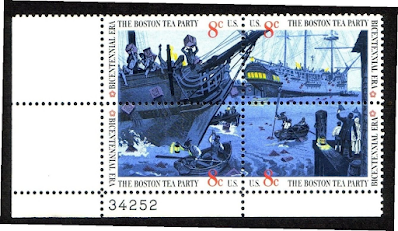
Ryan McMaken on the Boston Tea Party, mercantilism and the American Revolution

On the night of the Boston Tea Party in 1773, American insurrectionists donned disguises and destroyed a shipment of tea imported by the East India Company.  The protestors boarded privately owned ships in the harbor and threw the tea overboard.  Later that night, the activists discovered another tea shipment that had been unloaded at a warehouse.  Not content with having destroyed most of the company's import, they broke into the warehouse and destroyed that tea, too.  The total damages amounted to more than $1.5 million in today's dollars.

This was the work of the Sons of Liberty, a group which would become known for acts of resistance, arson, and violence against tax collectors and other agents of the crown.

But why destroy the tea of a private company if the group's target was the British state?  The answer, of course, is that the East India Company was essentially an adjunct of the regime and private in name only.  This was the era of mercantilism, when colonial governments used protectionism and monopoly powers to enrich the state and its supporters through supposedly private companies.  The Sons of Liberty understood the system well and targeted the "private" East India Company.

The success of the American Revolution struck a heavy blow against the mercantilist system.  But unfortunately, the wound was not mortal.  Many old mercantilist policies persisted under new labels and were promoted with new claims of helping "the people."  The regime of the new republic, too, used the tools of cartelization, monopoly, regulation, and taxation to support certain corporate friends at the expense of the ordinary people.

~ Ryan McMaken, "From the Editor," The Misesian, p. 5, January-February 2025
1973


Dec 31, 2023

Ryan McMaken on the political logic of sanctions

The idea behind sanctions has long been to make the population suffer so that "the people" will revolt against the ruling regime and force it to cease the policies that the sanction-imposing regimes find objectionable.  In many cases, the stated goal is regime change.  It's essentially the same philosophy behind Allied efforts to bomb German civilians during World War II: it was assumed the bombing would ruin civilians' morale and lead to domestic demands that Berlin surrender. 

Economic sanctions are less despicable than bombers targeting civilians, of course, but they are also likely less effective.  Instead of convincing the domestic population to abandon their own regime, foreign attacks on civilians—whether military or economic—often cause the domestic population to double down on their opposition to foreign powers.

~ Ryan McMaken, "Why Sanctions Don't Work, and Why They Mostly Hurt Ordinary People," Mises.org, March 9, 2022


May 12, 2023

Ryan McMaken on recent contraction in the money supply

The fact that the money supply is shrinking at all is so remarkable because the money supply almost never gets smaller.  The money supply has now fallen by $2.2 trillion (or 10.2 percent) since the peak in April 2022.  Proportionally, the drop in money supply since 2022 is the largest fall we've seen since the Depression.  (Rothbard estimates that in the lead up to the Great Depression, the money supply fell by 12 percent from its peak of $73 billion in mid-1929 to $64 billion at the end of 1932.)


Sep 15, 2020

Ryan McMaken on risk management

Yesterday, I saw a morbidly obese man riding a motorcycle down the highway. With no helmet. He was wearing a mask, though!

~ Ryan McMaken, tweet, September 15, 2020


Jul 2, 2020

Ryan McMaken on police and a second lockdown

Will police ignore murders while they rush to close businesses and arrest fathers who take their children to a park?

Experience suggests this would just be par for the course. After all, the evidence has long shown that police focus on petty crimes while devoting few resources to serious violent crimes. There would be nothing shocking about a police force that refuses to pursue dangerous criminals while bringing the full wrath of a SWAT team against patrons at a tavern. It is easier—both practically and politically—to arrest a middle-aged mom who refused to close her business while letting violent rioters go free.

~ Ryan McMaken, "Will the Police Crack Down on Lockdown Violators the Second Time Around?," Mises.org, June 26, 2020

ferg

Jun 9, 2020

Ryan McMaken on failure of the police to protect taxpaying citizens

A failure to protect taxpaying citizens from violence and crime in a wide variety of situations is standard operating procedure for police departments that are under no legal obligation to protect anyone, and where "officer safety" is the number one priority. The lesson to be learned here is that the alleged "social contract" between citizens and the state is a one-way street: you pay taxes for police "services," and the police may or may not give you anything in return.

It is now a well-established legal principle in the United States that police officers and police departments are not legally responsible for refusing to intervene in cases where private citizens are in imminent danger or even in the process of being victimized. The US Supreme Court has made it clear that law enforcement agencies are not required to provide protection to the citizens who are forced to pay for police services year in and year out.

~ Ryan McMaken, "Minneapolis Riots Are a Reminder That Police Don't Protect You or Your Property," Mises.org, May 29, 2020

text

Jun 5, 2020

Ryan McMaken on the connection between the Covid-19 lockdowns and the BLM riots

There were many reasons to oppose the COVID-19 lockdowns. They cost human lives in terms of deferred medical treatmentThey cost human lives in terms of greater suicide and drug overdoses. Domestic abuse and child abuse have increased. There is also good reason to believe that lockdowns don't actually work. The lockdown activists capitalized on media-stoked fear to push their authoritarian agenda based not on science, but on the whims of a handful of experts who insisted that they need not present any actual evidence that their bizarre, draconian, and extreme scheme was worth the danger posed to human rights, health, and the economic well-being of billions of human beings.

Those who lacked the obsessive and irresponsible tunnel vision of the prolockdown people warned that there were other dangers as well, in terms of social and political conflict.

~ Ryan McMaken, "Three Ways Lockdowns Paved the Way for These Riots," Mises.org, June 2, 2020

riot