Showing posts with label stabilization of the price level. Show all posts

Jul 31, 2019

Jim Grant on Irving Fisher and his desire to smooth out the boom-and-bust cycle

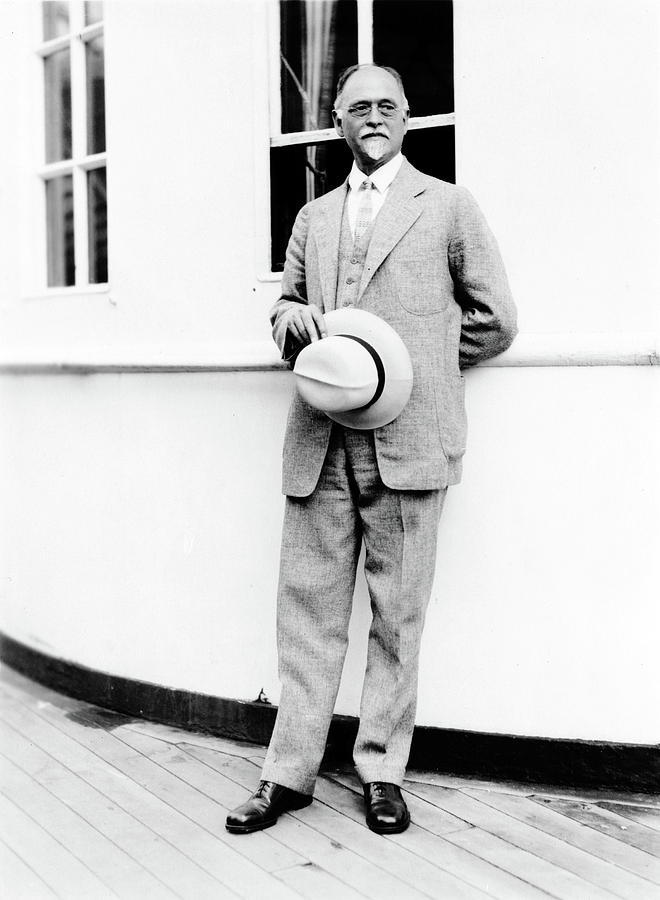
[Irving] Fisher was a man of few doubts and boundless energy.  He advocated for public health (with all the authority of the tuberculosis survivor that he was), prohibition, common stocks, eugenics, longevity through vegetarianism, Indian meditation - and government economic management.  An enlightened central bank could neutralize booms and busts alike by controlling the stock of money, or so he proposed.

Fisher rejected the Bryanite campaign for lots of silver dollars.  But he did not reject the notion that the quantity of money was of the utmost importance in determining prices and wages.  Neither did he share his contemporaries' fatalism with respect to the cycles of credit and business.

Stability was the ticket, he said.  The price level should neither rise nor fall but should remain the same.  Justice to debtors and creditors demanded it.  And enlightened central bankers might achieve it.  The age of laissez-faire was over, declared Fisher in 1906.

~ James Grant, The Forgotten Depression: 1921: The Crash That Cured Itself (2014), p. 28

Image result for the forgotten depression grant

Jul 28, 2019

Jim Grant on negative interest rates and the ghost of Irving Fisher

It's tempting to try to imagine how [Irving] Fisher would react to the negative interest rates of 2019.  He certainly had nothing against innovation.  One can imagine him falling in with the new thinking, or even, perhaps, leading it.  He was an inveterate tinkerer and an ardent reflationist.

If his analysis was correct, Fisher wrote in 1933, "it is always economically possible to stop of prevent such a depression simply by reflating the price level up to the average level at which outstanding debts were contracted by existing debtors and assumed by existing creditors, and then maintaining that [price] level unchanged."

The mind - at least our mind - boggles at the otherworldliness of this casual prescription.  "Simply by reflating?"  The dubious record of so-called quantitative easing suggests there would be nothing simple about it.  As to the unintended consequences of this prospective intervention, Fisher is silent.

~ Jim Grant, "The best economist on the lowest rates," Grant's Interest Rate Observer, July 26, 2019

Image result for irving fisher

Mar 29, 2017

Irving Fisher endorses presidential candidate Herbert Hoover (1928)

Mr. Hoover is a practical economist and one to whom is due more largely than to any other one man improvement in our prosperity...  Mr. Hoover knows as few men do the terrible evils of inflation and deflation, and the need of avoiding both if business and agriculture are to be stabilized.

~ Irving Fisher, July 29, 1928

Image result for irving fisher 1929

Mar 5, 2017

Ralph Hawtrey on the American experiment of stabilizing the price level

The American experiment in stabilization from 1922 to 1928 showed that early treatment could shake a tendency either to inflation or to depression in a few months, before any serious damage had been done.  The American experiment was a great advance upon the practice of the 19th century.

~ Ralph G. Hawtrey, British Treasury's Director of Financial Studies, The Art of Central Banking (1932), p. 300

(Murray Rothbard describes Hawtrey as "one of the evil geniuses of the 1920s" in America's Great Depression, p. 159.)

Sep 27, 2016

Lionel Robbins on the delusion of stabilizing the price level (1934)

If, as soon as there appeared signs of a general boom on security markets, the Central Banks were to take action to bring it to an end, it seems probable that extremes of business fluctuations might be avoided.  Certainly this is a policy which would have averted much of the distresses from which the world has been suffering recently.

But whatever may be the truth in this very difficult matter, one thing seems tolerably certain.  The policy of stabilizing the general level of prices and ignoring all other movements is a snare and a delusion.  It was this policy, conjoined with that other policy of frustrating the effects of gold movements, to which we have already alluded, which was largely responsible for the catastrophe of 1929.  Again and again during the boom years we were assured by men who should have known better that the trade cycle had been eliminated, that so long as prices did not rise there was no fear of over-expansion, that the boom in land and common stocks was merely a reflection of the increased value of property, and that if there were any sign of a fall of prices due to a transfer of expenditure to Stock Exchange and real-estate speculation, then the Central Banks should create more credit to support the speculation.  This policy was pursued.  Yet such is the inflexibility of the human mind that, in spite of all that it led to, there are yet to be heard voices of men who failed utterly to see what was happening before the depression, and who throughout the slump, no doubt with the best will in the world, have consistently supported those policies which have arrested liquidation, prolonged uncertainty and delayed the coming recovery.

~ Lionel Robbins, The Great Depression, 1934
Oct 13, 2009

Friedrich Hayek on monetary policy from the mid-1920s to the early 1930s

We must not forget that, for the last six or eight years monetary policy all over the world has followed the advice of the stabilizers. It is high time that their influence, which has already done harm enough, should be overthrown. 

~ Friedrich Hayek, 1932

Dec 6, 2007

Financial World: Fed can always stimulate business (1929)

It may be well again to stress the all-important point that the Federal Reserve has it in its power to change interest rates downward any time it sees fit to do so and thus to stimulate business. 

~ The Financial World, April 10, 1929