~ Doug Casey, "The Decline and Fall of the American Empire," International Man, August 31, 2022
Showing posts with label Roman empire. Show all posts
Sep 6, 2022
Doug Casey: "U.S. founders modeled the country on Rome"
U.S. founders modeled the country on Rome, all the way down to the architecture of government buildings, the use of the eagle as the national bird, the use of Latin mottos, and the unfortunate use of the fasces—the axe surrounded by rods—as a symbol of state power. Publius, the pseudonymous author of The Federalist Papers, took his name from one of Rome’s first consuls. As it was in Rome, military prowess is at the center of the national identity of the U.S. When you adopt a model in earnest, you grow to resemble it.
Oct 20, 2020
Edward Gibbon on the delusion of a benign dictatorship
[The Romans] must often have recollected the instability of a happiness which depended on the character of a single man. The fatal moment was perhaps approaching, when some licentious youth, or some jealous tyrant would abuse, to the destruction of that absolute power, which they had exerted for the benefit of their people. The ideal restraints of the senate and the laws might serve to display the virtues, but could never correct the vices of the emperor.
~ Edward Gibbon, The Decline and Fall of the Roman Empire (Volume I, Chapter III, Part II)
Oct 13, 2020
Edward Gibbon on democracy and the decline of the Roman empire
Under a democratical government, the citizens exercise the powers of sovereignty; and those powers will be first abused, and afterwards lost, if they are committed to an unwieldy multitude.
~ Edward Gibbon, The History of the Decline and Fall of the Roman Empire (1776), Volume I, Chapter II, Part I
Jul 28, 2020
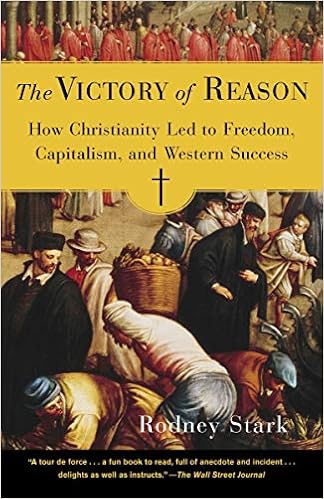
Rodney Stark on the fall of the Roman empire and Western Civilization
[T]he fall of Rome was not a tragic setback; had the empire prevailed, there would be nothing to call Western Civilization. If Rome still ruled, Europe would be mired in a brutal command economy, there would've been very little innovation of any kind, and the rest of the world probably would be much as Europeans found it in the 15th and 16th centuries. Empires are the enemies of progress!
~ Rodney Stark, The Victory of Reason: How Christianity led to freedom, capitalism and Western success, p. 75
Jan 9, 2017
Rodney Stark on why the fall of Rome was a blessing
The fall of Rome was not a tragic setback; had the empire prevailed, there would be nothing to call Western Civilization. If Rome still ruled, Europe would be mired in a brutal command economy, there would have been very little innovation of any kind, and the rest of the world probably would be much as Europeans found it in the fifteenth and sixteenth centuries. Empires are the enemies of progress!
~ Rodney Stark, The Victory of Reason, page 75
Dec 8, 2010
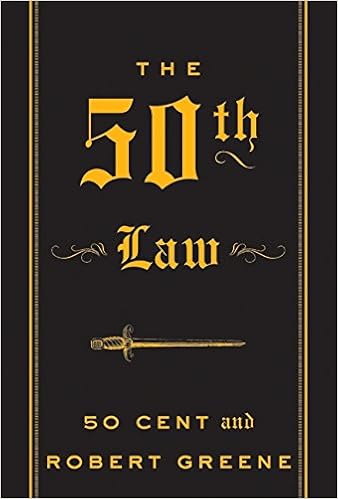
50 Cent and Robert Greene on the decline of America
America was once a country of great realists and pragmatists. This came from the harshness of the environment, the many dangers of frontier life. We had to become keen observers of everything going on around us to survive. In the nineteenth century, such a way of looking at the world led to innumerable inventions, the accumulation of wealth, and the emergence of our country as a great power. But with this growing power, the environment no longer pressed upon us so violently, and our character began to change.
Reality came to be seen as something to avoid. Secretly and slowly we developed a taste for escape - from our problems, from work, from the harshness of life. Our culture began to manufacture endless fantasies for us to consume. And fed on such illusions, we became easier to deceive, since we no longer had a mental barometer for distinguishing fact from fiction.
This is a dynamic that has repeated itself throughout history. Ancient Rome began as a small city state. Its citizens were tough and stoic. They were famous for their pragmatism. But as they moved from being a republic to an empire and their power expanded, everything reversed itself. Their citizens' minds hungered for newer and newer forms of escape. They lost all sense of proportion - petty political battles consumed their attention more than much larger dangers on the outskirts of the empire. The empire fell well before the invasion of the barbarians. It collapsed from the collective softness of its citizens' minds and the turning of their back on reality.
50 Cent and Robert Greene, The 50th Law
Reality came to be seen as something to avoid. Secretly and slowly we developed a taste for escape - from our problems, from work, from the harshness of life. Our culture began to manufacture endless fantasies for us to consume. And fed on such illusions, we became easier to deceive, since we no longer had a mental barometer for distinguishing fact from fiction.
This is a dynamic that has repeated itself throughout history. Ancient Rome began as a small city state. Its citizens were tough and stoic. They were famous for their pragmatism. But as they moved from being a republic to an empire and their power expanded, everything reversed itself. Their citizens' minds hungered for newer and newer forms of escape. They lost all sense of proportion - petty political battles consumed their attention more than much larger dangers on the outskirts of the empire. The empire fell well before the invasion of the barbarians. It collapsed from the collective softness of its citizens' minds and the turning of their back on reality.
50 Cent and Robert Greene, The 50th Law
Labels:
America's decline,
American empire,
delusion,
escapism,
Roman empire
Jan 7, 2009
Cicero on public debt and welfare
The budget should be balanced, the Treasury should be refilled, public debt should be reduced, the arrogance of officialdom should be tempered and controlled, and the assistance to foreign lands should be curtailed lest Rome become bankrupt. People must again learn to work, instead of living on public assistance.
~ Cicero, 55 BC
~ Cicero, 55 BC
Labels:
people - Cicero,
public debt,
Roman empire,
welfare
Oct 26, 2008
Cicero on public debt
The national budget must be balanced. The public debt must be reduced; the arrogance of the authorities must be moderated and controlled. Payments to foreign governments must be reduced, if Rome doesn't want to become bankrupt.
Cicero, 63 BC
Cicero, 63 BC
Labels:
debt,
people - Cicero,
public debt,
Roman empire
Subscribe to:
Posts (Atom)