~ Hannah Arendt, "The origins of totalitarianism," 1966
Showing posts with label public schools. Show all posts
Jun 29, 2025
Hannah Arendt on totalitarian education
The aim of totalitarian education has never been to instill convictions but to destroy the capacity to form any.
Oct 12, 2021
Doug Casey on public schools
Schools do not teach critical thinking—if indeed they ever did—at least since Plato’s Academy and Aristotle’s Lyceum. Critical thinking is the habit of questioning all assertions and examining everything that we think we know in the light of knowledge, logic, the scientific method, and your own research. That doesn’t exist anymore in schools. In fact, the government and the establishment don’t want schools to turn out critical thinkers and free thinkers. To the contrary, they want obedient, indoctrinated serfs who will do as they’re told and act as cogs in the wheel.
~ Doug Casey, "Doug Casey Reveals 3 Ways You Can Opt-Out of the Rising Insanity," Doug Casey's International Man, October 4, 2021
Mar 29, 2021
Donna Hearne on the roots of federally-funded education
These revolutionary educational movers, movements, and ideas coalesced in 1965, when President Lyndon Johnson created and passed, as a part of the "war on poverty," the Elementary and Secondary Education Act (ESEA). For the first time, education became an official federal program, even though it was not one of the legal areas for federal involvement specified in the Constitution. This law cleverly authorized federally-funded education programs, administered by the states, effectively shifting decision-making from the local to the federal. In 2002, Congress amended ESEA and reauthorized it as the No Child Left Behind Act. Social justice planners were delighted and went to work.
~ Donna H. Hearne, The Long War & Common Core, p. 4
Feb 16, 2021
G.K. Chesterton on compulsory education
The purpose of Compulsory Education is to deprive the common people of their commonsense.
~ G.K. Chesterton
Dec 19, 2020
John Stuart Mill on public schooling
A general State education is a mere contrivance for moulding people to be exactly like one another; and as the mould in which it casts them is that which pleases the predominant power in the government - whether this be a monarch, priesthood, an aristocracy, or the majority of the existing generation - in proportion as it is efficient and successful, it establishes a despotism over the mind, leading by natural tendency to one over the body.
~ John Stuart Mill, On Liberty, p. 177
Oct 26, 2020
Kevin Duffy compares laissez faire to social democracy
Quora question: Why does free market economy win against centrally planned & controlled economy?
Pascal Morimacil: The laissez-faire ideology is to let the totalitarian power structures created by private owners have full reign over the planet without having any democracy hinder them.
Kevin Duffy: This is Orwellian: freedom = control.
There is a critical difference between Jeff Bezos and modern day social democracies. Bezos can’t force anyone to do anything. He can persuade investors to invest in his money-losing scheme in the late 1990s, with the promise that they’ll someday be rewarded. He can hire people to work for him, often enticing them with stock options which would be worthless if the company failed. He can persuade customers to buy his company’s products. Of course the only way he’ll succeed is to give them better value, either with service, quality or lower price. He also has to make his suppliers happy.
All of these transactions are uncoerced and, as a result, mutually beneficial. They also involve a certain amount of risk from both parties, but if they’re not satisfied (or if a better deal comes along), they can leave. E.g., a customer can return an order or employee can quit and go work for a competitor. And, yes, it also means Bezos can, and does, fire employees. I’m sure he’s also terminated suppliers as well, and replaced them with others.
How do social democracies pass the coercion test? Not well. Everything the government does involves force. K-12 public schooling is a good example. The entire system is based on compulsory funding, curriculum and attendance. If, as a parent, you object to what the school teaches (which is increasingly pro-government propaganda, especially regarding history), you can’t get a tax refund and decide how your child spends his formative years. The closest you can come is homeschooling, but you are still under the thumb of the state.
But what about “democracy?” Doesn’t this give people choice? It gives a majority the ability to choose between two candidates who may or may not represent their views. In fact, it’s statistically impossible for ANY candidate to represent one’s views and choices fully.
The Founders were fearful of democracy and tried (unsuccessfully) to limit its abuses. Madison warned, “Democracy was the right of the people to choose their own tyrants.” Jefferson was just as harsh: “A democracy is nothing more than mob rule, where fifty-one percent of the people may take away the rights of the other forty-nine.”
The evidence that government-run schools are a danger is that these lessons have been lost.
~ Kevin Duffy, Quora answer, October 26, 2020
Sep 29, 2020
George Orwell on indoctrination
These two had great difficulty in thinking anything out for themselves, but having once accepted the pigs as their teachers, they absorbed everything that they were told, and passed it on to the other animals by simple arguments.
~ George Orwell, Animal Farm
Jul 10, 2020
Paul Craig Roberts on the state of education and critical thinking in America
What we are dealing with is not only the brainwashing of white students as to the evil origin of their country and their inherited guilt, but also their inability to think rationally and to make an objective conclusion from evidence. This was once the purpose of education, but no more. Today students are taught that their emotions are what is true, and their emotions are manipulated by the lies that they are taught.
This perversity of education spells the end of the United States. The kind of people American education is producing are not capable of scientific thinking. The kind of education Americans receive today cannot produce scientists or engineers. We have the emotive generation, people trained to be guided by emotion.
~ Paul Craig Roberts, "What is a Fatal Dose of Fentanyl?," LewRockwell.com, July 10, 2020
This perversity of education spells the end of the United States. The kind of people American education is producing are not capable of scientific thinking. The kind of education Americans receive today cannot produce scientists or engineers. We have the emotive generation, people trained to be guided by emotion.
~ Paul Craig Roberts, "What is a Fatal Dose of Fentanyl?," LewRockwell.com, July 10, 2020
Jan 18, 2020
Tom DiLorenzo on Yankees, public schooling and Prohibition
The word "Yankee" gained popularity in the early to mid nineteenth century to describe a particular brand of New Englander: arrogant, hypocritical, unfriendly, condescending, intolerant, extremely self-righteous, and believing that he and his were God’s chosen people.
Yankees have never shied away from using the coercive powers of the state to compel others to be remade in their image. That’s why compulsory government schooling originated in New England, as did prohibitionism. It’s also why Stalinism took hold in the North (especially in New York City) in the twentieth century, as did its offshoot, neoconservativism, in more recent times. Indeed, many of the more notorious neoconservatives openly admit that they were Stalinists in their youth and have never fully abandoned those beliefs.
At the outbreak of the War to Prevent Southern Independence there was a vigorous secession movement in what were known then as the Middle States — Maryland, Pennsylvania, Delaware, New York, New Jersey. During the war there were thousands of Northern "peace Democrats" who opposed Lincoln and his Yankee cabal. These people, who were essentially Jeffersonians, had one thing in common with the Southern Confederates: they despised the arrogant, pushy, greedy, and insufferably self-righteous Yankees. They were ruthlessly censored and imprisoned by the tens of thousands by the Lincoln government. When they rioted over military conscription, the Yankee army shot them dead in the streets by the hundreds if not thousands (See Iver Bernstein, The New York City Draft Riots).
~ Tom DiLorenzo, "The Myth of the Morally Superior Yankee," LewRockwell.com, February 10, 2004
Yankees have never shied away from using the coercive powers of the state to compel others to be remade in their image. That’s why compulsory government schooling originated in New England, as did prohibitionism. It’s also why Stalinism took hold in the North (especially in New York City) in the twentieth century, as did its offshoot, neoconservativism, in more recent times. Indeed, many of the more notorious neoconservatives openly admit that they were Stalinists in their youth and have never fully abandoned those beliefs.
At the outbreak of the War to Prevent Southern Independence there was a vigorous secession movement in what were known then as the Middle States — Maryland, Pennsylvania, Delaware, New York, New Jersey. During the war there were thousands of Northern "peace Democrats" who opposed Lincoln and his Yankee cabal. These people, who were essentially Jeffersonians, had one thing in common with the Southern Confederates: they despised the arrogant, pushy, greedy, and insufferably self-righteous Yankees. They were ruthlessly censored and imprisoned by the tens of thousands by the Lincoln government. When they rioted over military conscription, the Yankee army shot them dead in the streets by the hundreds if not thousands (See Iver Bernstein, The New York City Draft Riots).
~ Tom DiLorenzo, "The Myth of the Morally Superior Yankee," LewRockwell.com, February 10, 2004
Jan 2, 2020
Curt Howland on the failure of public schools
The single biggest reason for the failure of the government “school” system is that it is a government system.
The purpose of the system is to serve their customers. The students and parents are not the customers, the bureaucrats and politicians who pay the bills are. Since it is the politicians and bureaucrats who are the customers, the “school” system serves their customers by growing, employing more bureaucrats, demanding more taxes, expanding their facilities. That is how a bureaucracy measures success: larger staff, bigger budgets. Students and parents are a cost to be minimized. Any actual education is incidental to the real purpose of the “school” system, which is to perpetuate and grow the “school” system.
When government bureaucracies fail at their supposed goals, they are given more money and more personnel. That is bureaucratic success. So by minimizing any actual “education,” by making the “school” system as awful as possible for the students while using propaganda to convince parents the system is actually necessary, the bureaucracy best serves their actual customers while ensuring ever growing budgets and bureaucratic staff.
If people care about education, the first and best thing they can do is get their precious children out of the government “schools."
~ Curt Howland, Quora answer, January 2, 2020
The purpose of the system is to serve their customers. The students and parents are not the customers, the bureaucrats and politicians who pay the bills are. Since it is the politicians and bureaucrats who are the customers, the “school” system serves their customers by growing, employing more bureaucrats, demanding more taxes, expanding their facilities. That is how a bureaucracy measures success: larger staff, bigger budgets. Students and parents are a cost to be minimized. Any actual education is incidental to the real purpose of the “school” system, which is to perpetuate and grow the “school” system.
When government bureaucracies fail at their supposed goals, they are given more money and more personnel. That is bureaucratic success. So by minimizing any actual “education,” by making the “school” system as awful as possible for the students while using propaganda to convince parents the system is actually necessary, the bureaucracy best serves their actual customers while ensuring ever growing budgets and bureaucratic staff.
If people care about education, the first and best thing they can do is get their precious children out of the government “schools."
~ Curt Howland, Quora answer, January 2, 2020
Labels:
bureaucracy,
bureaucrats,
people - Howland; Curt,
public schools,
Quora
Dec 30, 2019
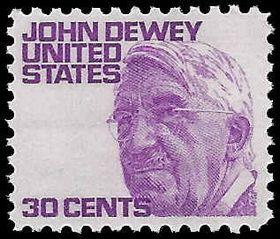
John Dewey on public schools and social change
Schools should take an active part in directing social change, and share in the construction of a new social order.
~ John Dewey

~ John Dewey

Jun 30, 2017
Zachary Slayback on the difference between education and schooling
Schooling is a process. Schooling is something that is set up, and not all schooling is necessarily bad. But schooling that is forced on people is usually bad, and it is a process that people go through. Education is substance. Education is something you engage in in order to learn things, in order to adapt, in order to change. It's something that doesn't have a beginning or an end.
[...]
Education is something that is highly individually driven. It has certain ends. I think that the end and the purpose of education is to equip people to identify what meaning is in their life and to try to achieve that meaning from their life. School on the other hand is usually meant to just impress bureaucrats.
~ Zachary Slayback, co-founder of Praxis, Tom Woods Show podcast, "The End of School: Reclaiming Education from the Classroom," March 22, 2016
[...]
Education is something that is highly individually driven. It has certain ends. I think that the end and the purpose of education is to equip people to identify what meaning is in their life and to try to achieve that meaning from their life. School on the other hand is usually meant to just impress bureaucrats.
~ Zachary Slayback, co-founder of Praxis, Tom Woods Show podcast, "The End of School: Reclaiming Education from the Classroom," March 22, 2016
Mar 5, 2017
Ludwig von Mises on indoctrination in public schools vs. popular culture
On the high school level and even on the college level the handing down of historical and economic knowledge is virtually indoctrination. The greater part of the students are certainly not mature enough to form their own opinion on the ground of a critical examination of their teachers' representation of the subject.
If public education were more efficient than it really is, the political parties would urgently aim at the domination of the school system in order to determine the mode in which these subjects are to be taught. However, general education plays only a minor role in the formation of the political, social, and economic ideas of the rising generation. The impact of the press, the radio, and environmental conditions is much more powerful than that of teachers and textbooks. The propaganda of the churches, the political parties, and the pressure groups outstrips the influence of the schools, whatever they may teach. What is learned in school is often very soon forgotten and cannot carry on against the continuous hammering of the social milieu in which a man moves.
~ Ludwig von Mises, Human Action, pp. 877-878
If public education were more efficient than it really is, the political parties would urgently aim at the domination of the school system in order to determine the mode in which these subjects are to be taught. However, general education plays only a minor role in the formation of the political, social, and economic ideas of the rising generation. The impact of the press, the radio, and environmental conditions is much more powerful than that of teachers and textbooks. The propaganda of the churches, the political parties, and the pressure groups outstrips the influence of the schools, whatever they may teach. What is learned in school is often very soon forgotten and cannot carry on against the continuous hammering of the social milieu in which a man moves.
~ Ludwig von Mises, Human Action, pp. 877-878
Dec 10, 2016
H.L. Mencken on public education
The aim of public education is not to spread enlightenment at all; it is simply to reduce as many individuals as possible to the same safe level, to breed a standard citizenry, to put down dissent and originality. That is its aim in the United States, whatever the pretensions of politicians, pedagogues, and other such mountebanks, and that is its aim everywhere else...Their purpose, in brief, is to make docile and patriotic citizens, to pile up majorities, and to make John Doe and Richard Doe as nearly alike, in their everyday reactions and ways of thinking, as possible.
~ H.L. Mencken
~ H.L. Mencken
Labels:
conformity,
people - Mencken; H.L.,
public schools
Nov 28, 2016
Chubb and Moe on democracy and public schools
Democracy is essentially coercive. The winners get to use public authority to impose their policies on the losers.
~ John E. Chubb and Terry M. Moe, Politics, Markets & America's Schools (1990), p. 183
May 14, 2011
G. K. Chesterton on public schooling
The purpose of Compulsory Education is to deprive the common people of their commonsense.
~ G. K. Chesterton
~ G. K. Chesterton
Jun 5, 2009
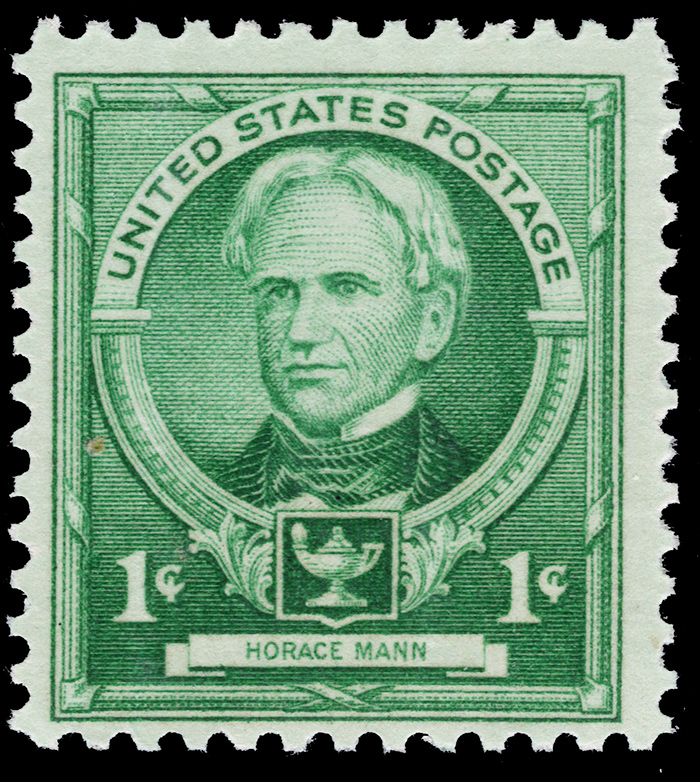
Horace Mann on public education
We who are engaged in the sacred cause of education are entitled to look upon all parents as having given hostages to our cause.
~ Horace Mann
~ Horace Mann
![]() |
| Horace Mann 1940 |
May 29, 2009
Why does government teach children?
The role of the schoolmaster is to collect little plastic lumps of human dough from private households and shape them on the social kneadingboard.
~ Edward Alsworth Ross, late 19th century University of Wisconsin sociologist and one of Teddy Roosevelt's favorite writers
Labels:
conformity,
education,
indoctrination,
public schools
May 7, 2008
John Stuart Mill on public education, conformity and statism
A general State education is a mere contrivance for moulding people to be exactly like one another: and as the mould in which it casts them is that which pleases the predominant power in the government, whether this be a monarch, a priesthood, an aristocracy, or the majority of the existing generation, in proportion as it is efficient and successful, it establishes a despotism over the mind, leading by natural tendency to one over the body.
~ John Stuart Mill, On Liberty (1859)
Nov 12, 2007
Benjamin Disraeli on public schooling
Wherever is found what is called a paternal government, there is found state education. It has been discovered that the best way to insure implicit obedience is to commence tyranny in the nursery.
~ Benjamin Disraeli, Speech in the House of Commons, June 15, 1874
Subscribe to:
Posts (Atom)