May 21, 2025

Shaun Rein on bringing back manufacturing to America

If Trump, Howard Lutnick, Scott Bessent want to bring low end manufacturing back to America to create low paying jobs for Americans, we should make a rule that their kids & grandkids should work in the factories first. 
 
Instead of designing dresses & shoes, Ivanka should sew clothes & cobble shoes together for her brand. 

Instead of Kai hitting golf balls, she should work in a factory making golf balls or the clothes for Tiger Woods, her mother's boyfriend.

Donny Jr could work as a foreman in a rare earth mine or gas field - he's full of enough hot air.

No, I want my kid and future grandkids innovating the next iPhone or drone company, not making them on the factory floor.

I want my descendants staying healthy by running in Nike or Hoka shoes, not making them. 

Yes, China benefits from trade with America.  But we benefit from trade with China too.  Our prosperity over the last 25 years is largely based on the backs of Chinese, Vietnamese, Cambodian workers.

We should be thanking them for making our lives better, not pillorying them. 

We should have a rule - any Congressmen or Cabinet member that supports war or reshoring low end manufacturing should be forced to have their progeny go to battle or work in factories first. 

I'd bet the warmongering and voodoo economic theory would stop immediately.

~ Shaun Rein, LinkedIn post, May 20, 2025


May 16, 2025

Sheldon Richman on Trump's "America First" agenda

America is an abstraction, which means different things to different people. In one sense, it's a country but not a single organism.  It's an association of individuals who have different interests built on their fundamental interest in peace and freedom.  Government tampering with freedom always favors some over others.  One person's subsidy is another person's burden.  Which one represents the real America?  Steel tariffs help steel producers (in the short term) but harm steel users, who far outnumber the producers.  This is an old story.  Does it have to be pointed out?

So, what is America First?  It's putty in the hands of a demagogue.

"American interests" are interests as seen by the people who run the government, that is, America's rulers.  They are a filter, an interpretation by interested parties.  This affords abundant opportunities to pursue narrow and even personal agendas. Rulers need not have any common interest with regular people.  They need votes, however, so rulers will strike the required poses, especially in election season. 

America First is about power and devotion to the ruler, without whom we cannot prosper.  You know the song and dance.

~ Sheldon Richman, "TGIF: Individuals, Not America First," Free Association, May 16, 2025


May 14, 2025

Derek Au on TSMC's Arizona semiconductor factories

Despite significant delays and cost overruns at TSMC’s Arizona plants, the company invested $65 billion during the Biden years and pledged another $100 billion after Trump took office. Derek Au, keen technology observer and investor, writes: 
Were it not for the punitive actions of the US [threat of tariffs], there is simply no advantage for the TSMC to build in the US.  The CHIPS Act subsidy is just a mild sweetener.  If you listen carefully to the announcement at the White House, Trump doesn’t even try to hide it.  He says he strong armed the Chairman [C.C. Wei].  If we believe in comparative advantage there are none for building advanced fabs in the US.  The operating costs are much higher, salaries are higher and there is no domestic talent.  There is also no local supplier chain. Everything has to be imported.  In Arizona they are saying the area around the fab is becoming Little Taipei.  Ethnic restaurants and grocery stores are springing up to cater to the new workers from abroad.  I’ve read that operating US chip plants would lower operating margins for the entire TSMC.  But they have no choice, because Trump is going after not only TSMC but its customers to force a realignment of the supply chain.
Derek recently visited a TSMC factory in northern Phoenix:
The place is pretty massive.  I drove around the front of the fab and all of the people in the employee lots walking towards the building were Asians.  The non-Asians that I saw had construction vests and looked like contractors, construction workers… 
~ Derek Au, as quoted in "Mercantilism in America," The Coffee Can Portfolio, May 6, 2025


Murray Rothbard on the protectionist scheme

As we unravel the tangled web of protectionist argument, we should keep our eye on two essential points: (1) protectionism means force in restraint of trade; and (2) the key is what happens to the consumer.  Invariably, we will find that the protectionists are out to cripple, exploit, and impose severe losses not only on foreign consumers but especially Americans.  And since each and every one of us is a consumer, this means that protectionism is out to mulct all of us for the benefit of a specially privileged, subsidized few – and an inefficient few at that: people who cannot make it in a free and unhampered market. 

~ Murray Rothbard, “Protectionism and the Destruction of Prosperity,” 1986


Barbara Kolm and Miguel Del Valle on China's rise from poverty

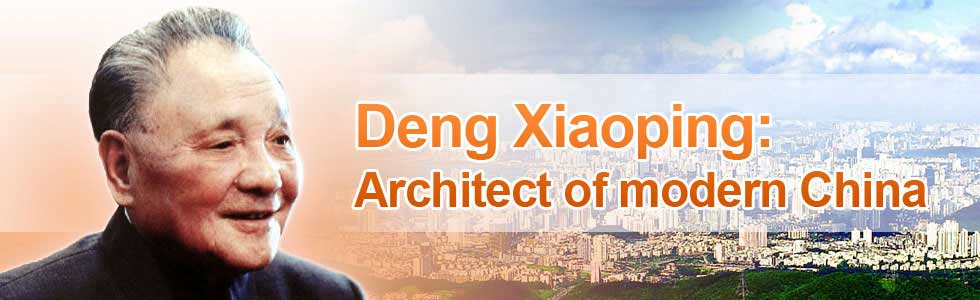
In the 70s, China was among the poorest nations in the world.  Civil war and mismanagement by central authorities had torn the country apart.  Mao Zedong’s vision of self-reliance destroyed agriculture, devastated the economy ‘and led to mass starvation as people’s communes were established and resources were forcibly shifted from farming to heavy industry.’ (Dorn 2023)  The death of Mao and subsequent rise of Deng Xiaoping enabled a series of reforms that would turn the country away from central planning and toward a market-oriented economy. 

~ Barbara Kolm and Miguel Del Valle, "Free Trade Under Siege: Analyzing Contemporary Trade Policies," Free Trade in the Twenty-First Century (p. 237)


Wayne Winegarden and Rowena Itchon on creative destruction

International trade, like all productive contributions to economic growth, is a creatively destructive process that improves our lives by disrupting the old way of doing things.  While necessary to generate broad-based prosperity, these disruptions are not without a cost.  The growth in internet retailers, for instance, has brought a wider array of more affordable goods and services directly to people’s doorsteps around the world.  Between 2007 and 2017, it also created nearly a half million new jobs in fulfillment centers and e-commerce companies in the U.S. alone that paid nearly a third more than brick-and-mortar retail jobs on average.  While the job gains in the new economy also caused job losses and business closings for brick-and-mortar retailers, on net, e-commerce has vastly improved our quality of life.

~ Wayne Winegarden and Rowena Itchon, “Free Trade Myths and Realities” Free Trade in the Twenty-First Century, pp. 643-644


Kevin Duffy on Walter Williams

As a younger man, I had the privilege of hearing the late free market economist, Walter Williams, speak.  “People are worried about saving jobs, but as an economist, I get excited when jobs are destroyed,” he told the audience.  “Should we bemoan the invention of the dishwashing machine because it puts dish washers out of work?  There are an infinite number of jobs. Just come to my house this weekend and I’ll prove it to you.”

~ Kevin Duffy, "Mercantilism in America," The Coffee Can Portfolio, May 6, 2025