Jul 10, 2023

Ann Landers on staying positive

When life's problems seem overwhelming, look around and see what other people are coping with.  You may consider yourself fortunate.

~ Ann Landers, columnist


Enzo Ferrari on leadership

I gave (my drivers) three things: a sense of optimism, a creative environment and the ultimate motivator - competition.  By competing with each other in-house, we wound up beating our rivals.

~ Enzo Ferrari, auto racer, designer


Peter Bauer on foreign aid

Aid is the process by which the poor in rich countries subsidize the rich in poor countries.

~ Peter Bauer


Peter Bauer on foreign aid

If mainsprings of development are present, material progress will occur even without foreign aid.  If they are absent, it will not occur with aid.

~ Peter Bauer, development economist


Jul 9, 2023

Murray Rothbard on order vs. chaos

Another critical dispute between traditionalists and libertarians is over the role and the nature of order.  To the traditionalist, order is the overriding consideration, and order can only be achieved by a massive imposition of state coercion.  To the traditionalist, liberty is arrant chaos and disorder, and the libertarian is someone who wishes to sacrifice order on the altar of liberty.  The libertarian, on the contrary, has a diametrically opposed view.  To him, the only genuine order among men proceeds out of free and voluntary interaction: a lasting order that emerges out of liberty rather than by suppressing it.  With Proudhon [considered by many to be the "father of anarchism"], the libertarian hails Liberty as the "Mother, not the Daughter of Order."  In this way, the libertarian sees the harmonious interaction of free people as akin to the harmonious interaction of natural entities that is summed up as "natural law."

State coercion, on the other hand, is viewed by the libertarian as a pseudo-order which actually results in disorder and chaos.  State-imposed order is "artificial" and destructive of the harmony provided by following the natural order.  Economic science has long shown that individuals, pursuing their own interests in the marketplace, will benefit everyone.  The free market has been shown to be the only genuine economic order, while state coercion hampering that market only subverts genuine order and causes dislocation, general impoverishment and, eventually, economic chaos.  Moreover, one of our most distinguished free-market economists, F.A. Hayek, has extended the concept of what he has trenchantly termed "spontaneous order" to include many other activities than the economic sphere.  Hayek has pointed out that the evolution of human language itself was not imposed by coercion from above but emerged from the free and voluntary interaction of individual persons.  To use a phrase of Hayek's language, the origin of money, and the market itself were products or byproducts of human action, not human design.

~ Murray Rothbard, "Frank S. Meyer: The Fusionist as Libertarian," originally published in Modern Age, Fall 1981, pp. 16-17

Pierre-Joseph Proudhon


Lawrence Reed on how FDR campaigned against the big spending policies of Hoover in 1932

Did Hoover really subscribe to a "hands-off-the-economy" free-market philosophy?  His opponent in the 1932 election, Franklin Roosevelt, didn't think so.  During the campaign, Roosevelt blasted Hoover for spending and taxing too much, boosting the national debt, choking off trade, and putting millions on the dole.  He accused the president of "reckless and extravagant" spending, of thinking "that we ought to center control of everything in Washington as rapidly as possible," and of presiding over "the greatest spending administration in peacetime in all of history."  Roosevelt's running mate, John Nance Garner, charged that Hoover was "leading the country down the path of socialism."  Contrary to the conventional view about Hoover, Roosevelt and Garner were absolutely right.

~ Lawrence W. Reed, "Great Myths of the Great Depression," Mackinac Center for Public Policy, 1981


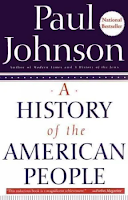
Paul Johnson on H.L. Mencken's attacks against the New Deal

Mencken excelled himself in attacking the triumphant FDR, whose whiff of fraudulant collectivism filled him with genuine disgust.  He was the 'Fuhrer,' the 'Quack,' surrounded by 'an astonishing rabble of impudent nobodies,' 'a gang of half-educated pedagogues, nonconstitutional lawyers, starry-eyed uplifters and other such sorry wizards.'  His New Deal was a 'political racket,' a series of stupendous bogus  miracles,' with its 'constant appeals to class envy and hatred,' treating government as 'a milch-cow with 125 million teats' and market by 'frequent repudiations of categorical pledges.'

~ Paul Johnson, A History of the American People (1997), p. 762