Is the stock market riskier today than two years ago simply because prices are higher? The answer is no.
~ Jeffrey M. Applegate, former chief investment strategist, Lehman Brothers, BusinessWeek, April 10, 2000
Aug 1, 2010

Robert Froelich on the new world order of the Tech Bubble (2000)
It's a new world order. We see people discard all the right companies with all the right people with the right vision because their stock price is too high-- that's the worst mistake an investor can make.
~ Robert Froelich, chief investment strategist, Kemper Funds, Wall Street Journal, January 18, 2000
(Froelich's favorite stocks -- Cisco Systems and Motorola -- fell more than 70% by late 2002. Investors lost more than $400 billion on Cisco alone-- more than the annual economic output of Hong Kong, Israel, Kuwait and Singapore combined. --Commentary by Jason Zweig in The Intelligent Investor)
~ Robert Froelich, chief investment strategist, Kemper Funds, Wall Street Journal, January 18, 2000
(Froelich's favorite stocks -- Cisco Systems and Motorola -- fell more than 70% by late 2002. Investors lost more than $400 billion on Cisco alone-- more than the annual economic output of Hong Kong, Israel, Kuwait and Singapore combined. --Commentary by Jason Zweig in The Intelligent Investor)
Jim Cramer on Benjamin Graham during the Tech Bubble (2000)
[Internet-related companies] are the only ones worth owning right now. [These "winners of the new world"] are the only ones that are going higher consistently in good days and bad.
You have to throw out all the matrices and formulas and texts that existed before the Web... If we use any of what Graham and Dodd teach us, we wouldn't have a dime under management.
~ Jim Cramer, as hedge fund manager, as quoted by Jason Zweig in the commentary of The Intelligent Investor, February, 2000
You have to throw out all the matrices and formulas and texts that existed before the Web... If we use any of what Graham and Dodd teach us, we wouldn't have a dime under management.
~ Jim Cramer, as hedge fund manager, as quoted by Jason Zweig in the commentary of The Intelligent Investor, February, 2000
Jul 28, 2010
Neel Kashkari on calculating the cost of the TARP bailout
We have $11 trillion residential mortgages, $3 trillion commercial mortgages. Total $14 trillion. Five percent of that is $700 billion. A nice round number.
Seven hundred billion was a number out of the air. It was a political calculus. I said, ‘We don’t know how much is enough. We need as much as we can get [from Congress]. What about a trillion?’ ‘No way,’ Hank shook his head. I said, ‘Okay, what about 700 billion?’ We didn’t know if it would work. We had to project confidence, hold up the world. We couldn’t admit how scared we were, or how uncertain.
~Neel Kashkari, former Interim U.S. Assistant Secretary of the Treasury for Financial Stability, ex-Goldman Sachs banker, "Neel Kashkari's Fuzzy TARP Math," WSJ.com, December 7th, 2009
Seven hundred billion was a number out of the air. It was a political calculus. I said, ‘We don’t know how much is enough. We need as much as we can get [from Congress]. What about a trillion?’ ‘No way,’ Hank shook his head. I said, ‘Okay, what about 700 billion?’ We didn’t know if it would work. We had to project confidence, hold up the world. We couldn’t admit how scared we were, or how uncertain.
~Neel Kashkari, former Interim U.S. Assistant Secretary of the Treasury for Financial Stability, ex-Goldman Sachs banker, "Neel Kashkari's Fuzzy TARP Math," WSJ.com, December 7th, 2009
Jul 27, 2010
James Madison on standing armies
A standing military force, with an overgrown Executive will not long be safe companions to liberty. The means of defence agst. foreign danger, have been always the instruments of tyranny at home. Among the Romans it was a standing maxim to excite a war, whenever a revolt was apprehended. Throughout all Europe, the armies kept up under the pretext of defending, have enslaved the people.
~ James Madison, Constitutional Convention, [June 29, 1787]
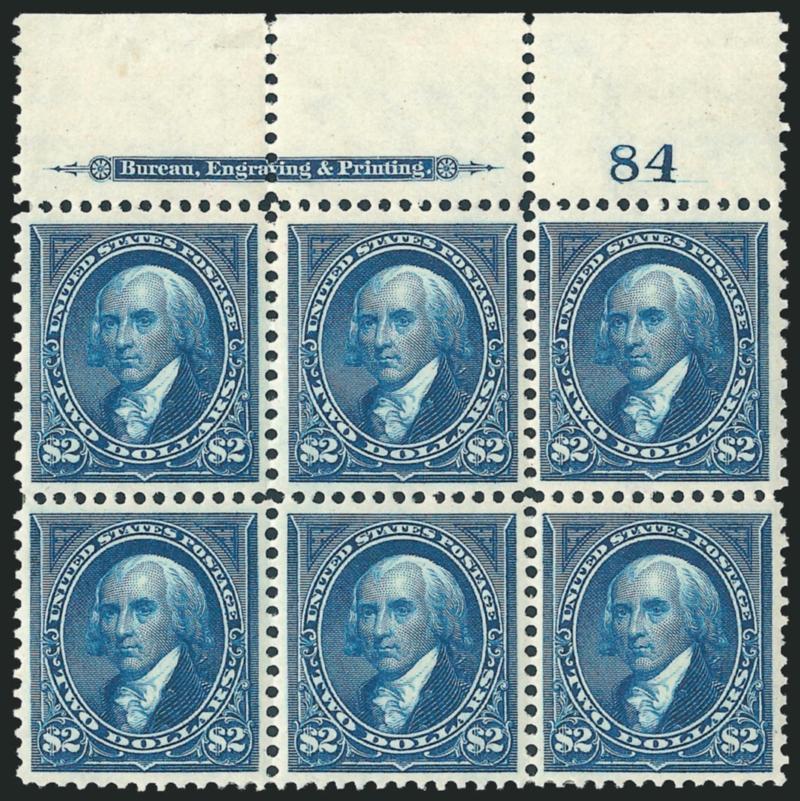
~ James Madison, Constitutional Convention, [June 29, 1787]
Jul 23, 2010
Larry Summers on sponsoring economic growth from the Whitehouse
We're determined, the President has said it many times, to do what's necessary for growth. The fact that it happened too late, it happened too slowly, but the fact that Congress is at last extending unemployment insurance, looks like it is on the verge of providing new credit and tax incentives for small business, it's starting to move on a broader range of programs to support energy, remembering the needs of state and local governments.
All of this will contribute to supporting and extending the momentum of growth. This is an economy we're watching very closely and we'll do what's necessary.
~ Larry Summers, director, National Economic Council, CNBC's Closing Bell, July 21st, 2010
All of this will contribute to supporting and extending the momentum of growth. This is an economy we're watching very closely and we'll do what's necessary.
~ Larry Summers, director, National Economic Council, CNBC's Closing Bell, July 21st, 2010
Larry Summers on calculating future capital requirements for financial institutions
Look, Maria, what am I going to do, give you a number [for what bank capital ratios should be in the future]? It's a very complex subject.
I will say this: it's clear that there wasn't enough capital in the system and there was too much leverage before. And it's clear that whatever we do we're going to need to do in a way that recognizes that we've got a recession from which we have to recover and that's going to depend on a strong flow of credit. And so, assuring a strong flow of credit, but getting to healthier, better capitalized institutions, that's the tradeoff we're going to make on Basel.
~ Larry Summers, director, National Economic Council, CNBC's Closing Bell, July 21st, 2010
I will say this: it's clear that there wasn't enough capital in the system and there was too much leverage before. And it's clear that whatever we do we're going to need to do in a way that recognizes that we've got a recession from which we have to recover and that's going to depend on a strong flow of credit. And so, assuring a strong flow of credit, but getting to healthier, better capitalized institutions, that's the tradeoff we're going to make on Basel.
~ Larry Summers, director, National Economic Council, CNBC's Closing Bell, July 21st, 2010
Subscribe to:
Posts (Atom)
