Nov 30, 2007
Jim Cramer bullish on financial stocks
~ Jim Cramer, Mad Money, CNBC November 30, 2007
(Cramer recommended Bank of America (BAC), Wachovia Bank (WB), Citigroup (C), Goldman Sachs (GS), and Annaly Mortgage (NLY).)
Moving Picture Institute on the history proficiency of college seniors
~ Rob Pfaltzgraff, executive director, Moving Picture Institute, October 29, 2007
Alexis de Tocqueville on slavery
Still, as the persevering enemy of despotism everywhere, and under all its forms, I am pained and astonished by the fact that the freest people in the world is, at the present time, almost the only one among civilized and Christian nations which yet maintains personal servitude; and this while serfdom itself is about disappearing, where it has not already disappeared, from the most degraded nations of Europe.
An old and sincere friend of America, I am uneasy at seeing Slavery retard her progress, tarnish her glory, furnish arms to her detractors, compromise the future career of the Union which is the guaranty of her safety and greatness, and point out beforehand to her, to all her enemies, the spot where they are to strike. As a man, too, I am moved at the spectacle of man's degradation by man, and I hope to see the day when the law will grant equal civil liberty to all the inhabitants of the same empire, as God accords the freedom of the will, without distinction, to the dwellers upon earth.
~ Alexis de Tocqueville, Democracy in America, 1835
Nov 29, 2007
Charles Barkley on job security for NBA basketball coach Isiah Thomas
~ Charles Barkley, TNT, commenting in the 4th quarter of a 45-point blowout by the Celtics of the Knicks, coached by Thomas, November 29, 2007
Jim Michaels on independent thinking
~ Jim Michaels, Forbes editor, 1961-1999
Jim Michaels on rebels, upstarts and Michael Milkin
Michaels had a particular fascination with Michael Milken, and coauthored an epic story in 1992 telling the discredited financier's view of things. Sympathy for the devil? Well, Michaels was scarcely naive about this guy; his magazine was early (in 1984) in explaining Milken's bond-trading shenanigans. But by the time of his jailhouse interview with the junk bond king, Michaels had come to see Milken in a Schumpeterian light. Whether or not Milken had broken the rules of securities trading was far less important than how he had broken the patterns of capital formation. He had staked entrepreneurs, upstarts and predators to capital that they never would have seen from the old Wall Street. By doing so, he financed creative destruction: the shrinking of old industries and the building of new ones. For that, Milken became, in the mainstream media, an enemy of the people.
~ William Baldwin, editor, Forbes, "Iconoclasts," October 29, 2007
John Templeton on preparation
~ Sir John Templeton
Reagan on hard work
~ Ronald Reagan, The Guardian, March 31, 1987
Psychology
Psychology/Behavioral Finance:
- anchoring
- cognitive dissonance
- crowd behavior
- excuses - random event
- rationalizations - cash on sidelines, confidence, decoupling, demographics, double contrary, economic miracle (Goldilocks economy), economic resiliency, extrapolation ("buy the dip," greater fool theory, "it's different this time," "no end in sight"), follow the smart money, futility of macroeconomic forecasting, futility of timing ("buy and hold"), government as backstop (abundant liquidity, faith in the Fed, "too big to fail"), company or industry recession-proof, problem isolated or contained, valuations no longer matter
H.L. Mencken on elections
~ H.L. Mencken
Barbara Tuchman on cognitive dissonance
~ Barbara W. Tuchman, The March of Folly, Page 303
Dostoevsky on the power of humble love
~ Fyodor Dostoevsky
Einstein on human stupidity
~ Albert Einstein
Nov 28, 2007
Thomas DiLorenzo: "Mises was right and Samuelson was wrong" about central planning
Mises, of course, never budged from his position that rational economic calculation under socialism was an impossibility, and that middle-of-the-road policies would also inevitably lead to socialism. He was right and Samuelson was wrong, even though as late as the 1980s "everyone knew" the opposite was supposedly true.
~ Thomas DiLorenzo, "'Pragmatic' vs. Principled Libertarians," November 12, 2003
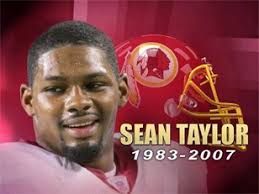
Jason Whitlock on the shooting death of NFL football player Sean Taylor
Rather than whine about white folks' insensitivity or reserve a special place of sorrow for rich athletes, we'd be better served mustering the kind of outrage and courage it took in the 1950s and 1960s to stop the white KKK from hanging black men from trees.
But we don't want to deal with ourselves. We take great joy in prescribing medicine to cure the hate in other people's hearts. Meanwhile, our self-hatred, on full display for the world to see, remains untreated, undiagnosed and unrepentant.
Our self-hatred has been set to music and reinforced by a pervasive culture that promotes a crab-in-barrel mentality.
You're damn straight I blame hip hop for playing a role in the genocide of American black men. When your leading causes of death and dysfunction are murder, ignorance and incarceration, there's no reason to give a free pass to a culture that celebrates murder, ignorance and incarceration.
~ Jason Whitlock, "Taylor's death a grim reminder for us all," FOXSports.com, November 28, 2007
Paul Samuelson on socialism in Eastern Europe (1976)
~ Paul Samuelson, Economics, 1976 edition
David Lloyd George on how to succeed at politics
~ David Lloyd George, Source: Lord Riddell Diary [April 23, 1919]
Alexis de Tocqueville on propaganda
~ Alexis de Tocqueville, Democracy in America (1835-1840)
Ludwig von Mises on war versus capitalism
~ Ludwig von Mises, Human Action (1949)
Patrick Henry on the Constitution
~ Patrick Henry
Lord Acton on federation and democracy
~ Lord Acton
Milton on freedom and the tyranny of the majority
~ John Milton
E. H. Carr on mind control and socialism
~ E. H. Carr
Charles W. Johnson on entitlement
~ Charles W. Johnson
Chalmers Johnson on war and imperialism
~ Chalmers Johnson, The Sorrows of Empire [2004]
William Graham Sumner on power
~ William Graham Sumner, American academic and advocate of free markets, 1840-1910
Trotsky on equality
~ Leon Trotsky
Lenin on security and freedom
~ Vladimir Lenin
Lord Acton on equality
~ Lord Acton
Adam Smith on government intervention
~ Adam Smith
Mussolini on the inevitability of planning
~ Benito Mussolini
Elie Halevy on socialism
~ Elie Halevy
Hoelderlin on utopianism
~ Friedrich Hoelderlin
Robert E. Lee on war
~ Robert E. Lee, Letter to his wife, December 25, 1862
Franklin D. Roosevelt on free enterprise
~ Franklin D. Roosevelt
Lord Acton on the source of ideas
~ Lord Acton
Kevin Duffy on the trouble with credit expansion
The trouble with pyramid schemes is that they’re not designed to go in reverse. Eventually, the number of willing dupes is exhausted. The same people who panicked late to get into the game are just as likely to panic when the music stops. The longer the music plays, the more leveraged and unstable the inverted credit pyramid becomes. As the late economist Hyman Minsky observed, "stability is unstable."
~ Kevin Duffy, Bearing Asset Management, "It's a Mad, Mad, Mad, Mad World," May 22, 2007
Nov 27, 2007
Richard Bove on Citigroup: "Best banking franchise in the world," expects stock to double
And the stock is just not reflecting that. All it's reflecting is the worst of the worst... There's a generalized panic out there; there's a hysteria. Each analyst is jumping on top of the other one, trying to argue for a bigger amount of writedown... And as a result of these, if you will, cacophony of misery that's coming out of the analyst community, these stocks have fallen to levels which are just unrealistic in terms of what the fundamentals of the companies offer.
If people want to look through the cycle, if they want to look through the writeoffs, I think from a current price of $29-30 a share, over the next couple of years the stock should double in price... The company's earnings power is considerable. It's the best banking franchise in the world... The value of that franchise is simply being lost as people worry themselves to death over what the size of the next writeoff will be.
~ Richard Bove, Punk Ziegel & Co., Bloomberg Video, November 27, 2007
(Citigroup stock closed at $30.32 per share, down $0.38.)
Paul Krugman blames credit crunch on greed and lack of regulation
But if the success turns out to have been an illusion - well, they still get to keep the money. Heads they win, tails we lose.
Not only is this grossly unfair, it encourages bad risk-taking and sometimes fraud. If an executive can create the appearance of success, even for a couple of years, he will walk away immensely wealthy. Meanwhile, the subsequent revelation that appearances were deceiving is someone else's problem.
If all this sounds familiar, it should. The huge rewards executives receive if they can fake success are what led to the great corporate scandals of a few years back. There's no indication that any laws were broken this time - but the public's trust was nonetheless betrayed, once again.
The point is that the subprime crisis and the credit crunch are, in an important sense, the result of our failure to effectively reform corporate governance after the last set of scandals.
~ Paul Krugman, "Krugman: Banks Gone Wild," International Herald Tribune, November 23, 2007
Warren Buffett on fear, greed and opportunity
~ Warren Buffett
Friedrich von Hayek on the invisible hand
~ Friedrich von Hayek, Law, Legislation and Liberty, Volume 2
Jack Kenny on Giuliani's tax cut record
~ Jack Kenny, "Saint Rudolph and the Dragon Lady," LewRockwell.com, November 27, 2007
Jack Kenny on Giuliani slaying the dreaded Hillary Clinton
"Rudy Giuliani is the only Republican who can beat Hillary Clinton and the Democrats in 2008," the slick mailer proclaims. Where, in Hoboken? Uncle Rudolph was going to defeat Hillary when she invaded New York and ran for the Senate in 2000. Some skeptics still believe it was his deteriorating poll numbers more than his health problems that convinced His Honor to withdraw from that race. Surely, he was healthy enough by 2006 to oppose Clinton in her run for reelection. By that time Giuliani, his political stock resurrected by the events of 9-11, was busy running for president. Too bad. Had he slain the dragon lady in ’06, a grateful GOP might have already handed him the presidential nomination for 2008. As it is, the "Only Rudy can beat Hillary" theme remains an untested theory.
~ Jack Kenny, "Saint Rudolph and the Dragon Lady," LewRockwell.com, November 27, 2007
CIBC analyst reiterates "underweight" on Citigroup after $7.5 billion Abu Dhabi infusion
~ Meredith Whitney, analyst, CIBC World Markets, "Citigroup gets $7.5 billion infusion from Abu Dhabi," MarketWatch, November 27, 2007
(Whitney, who received death threats after she recently downgraded her rating the bank, said she is now waiting for the other shoe to drop.)
Nov 26, 2007
Jim Grant on Benjamin Graham's bullishness in 1932
Graham was in the throes of composition in the spring of 1932, though he was writing not for his book publisher, McGraw-Hill, but for Forbes Magazine. Under his byline, starting in the issue dated June 1, appeared a three-part series headed, "Is American Business Worth More Dead Than Alive?" To judge by the valuations then prevailing on the New York Stock Exchange, the answer was "yes." More than a third of all listed industrial companies changed hands at less than the companies' own net current assets. In other words, the business values of these companies—as distinct fromo their net cash and other liquid assets—was worth less than zero.
Graham treated this astonishing fact not only with wonder—who could have dreamt it?—but also with a well-reasoned measure of indignation. In the long-vanished boom, companies had raised billions of dollars from the public. Now they were liquid, while the public was struggling to pay the rent and put food on the table. The only rational way to explain the existence of so many cheap stocks, Graham proposed, was that the market, in its wisdom, was discounting operating losses for years to come. But if that were the case, he asked, "should not the stockholder demand liquidation before his money is thus dissipated?"
Well, the market wasn't wise, he judged. It was an ass. How could it be otherwise when the people who bought and sold—especially those who sold—refused even to look at balance sheets? "Much of the past year's selling of stocks has been due to fear rather than necessity," Graham wrote in Forbes. "If these timid holders were thoroughly aware that they were selling out for only a fraction of the liquid assets behind their share, many of them might have acted differently. But since valuation has come to be associated exclusively with earning power, the stockholder no longer pays any attention to what his company owns—not even its money in the bank."
If "earning power" was the boomtime cry, "losing power" was the motto of the bust. "Is it true," Graham posed, "that one out of three American businesses is destined to continue losing money until the stockholders have no equity remaining? That is what the stock market says in no uncertain terms."
And Graham answered his own question: "In all probability [the market] is wrong, as it has always been wrong in its major judgments of the future. The logic of Wall Street is proverbially weak. It is hardly consistent, for example, to despair of the railroads because the trucks are going to take most of their business, and at the same time to be so despondent over the truck industry as to give away shares in its largest units for a small fraction of their liquid capital alone."
~ Jim Grant, "My Hero, Benjamin Grossbaum," speech given in Manhattan before the Center for Jewish History, November 15, 2007
Bernie Schaeffer: Call/put ratio suggests "it's a good time to be long the market"
~ Bernie Schaeffer, Schaeffer's Monday Morning Outlook, November 26, 2007
Ben Bernanke: "The U.S. government has a technology, called a printing press"
~ Ben Bernanke, Federal Reserve governor, from a speech before the National Economists Club, Washington, D.C., November 21, 2002
Ben Bernanke on avoiding deflation at all costs
Like gold, U.S. dollars have value only to the extent that they are strictly limited in supply. But the U.S. government has a technology, called a printing press (or, today, its electronic equivalent), that allows it to produce as many U.S. dollars as it wishes at essentially no cost. By increasing the number of U.S. dollars in circulation, or even by credibly threatening to do so, the U.S. government can also reduce the value of a dollar in terms of goods and services, which is equivalent to raising the prices in dollars of those goods and services. We conclude that, under a paper-money system, a determined government can always generate higher spending and hence positive inflation.
A more direct method, which I personally prefer, would be for the Fed to begin announcing explicit ceilings for yields on longer-maturity Treasury debt (say, bonds maturing within the next two years). The Fed could enforce these interest-rate ceilings by committing to make unlimited purchases of securities up to two years from maturity at prices consistent with the targeted yields. If this program were successful, not only would yields on medium-term Treasury securities fall, but (because of links operating through expectations of future interest rates) yields on longer-term public and private debt (such as mortgages) would likely fall as well.
~ Ben Bernanke, Federal Reserve governor, from a speech before the National Economists Club, Washington, D.C., November 21, 2002
Jacob Hornberger on Hitler's war on terror
Is it so surprising that ordinary German citizens were willing to support their government’s suspension of civil liberties in response to the threat of terrorism, especially after the terrorist strike on the Reichstag?
~ Jacob G. Hornberger, founder and president, The Future of Freedom Foundation, "Why Germans Supported Hitler," LewRockwell.com, July 19, 2007
Nov 25, 2007
Super SIV hasn't begun buying up SIV assets yet
There are 30 SIVs that held securities worth $400 billion when the mortgage meltdown began in July, according to Moody's Investors Service. Their net asset value fell more than 30 percent from July to mid-November. As of the first week of November, SIVs had been forced to sell at least $75 billion of assets as investors retreated from all but the safest bets.
~ Bloomberg.com, "Paulson Finds Bush's Treasury No Career Enhancer Like Goldman," November 21, 2007, by Rich Miller, Matthew Benjamin and Kevin Carmichael
Henry Paulson seeking advice from Wall Street's elite
He was on the phone daily through August and into September with Fed Chairman Ben S. Bernanke and was also in frequent touch with New York Fed President Timothy Geithner, the central bank's eyes and ears on Wall Street.
In mid-September, Paulson and his team summoned bankers to the Treasury building adjacent to the White House. The result was M-LEC [master liquidity enhancement conduit].
The idea -- and Treasury's involvement -- has been controversial from the get-go. Soon after the plan's announcement, former Fed Chairman Alan Greenspan and billionaire investor Warren Buffett questioned its practicality, saying investors would not be fooled by a shuffling around of unpalatable assets.
~ Bloomberg.com, "Paulson Finds Bush's Treasury No Career Enhancer Like Goldman," November 21, 2007, by Rich Miller, Matthew Benjamin and Kevin Carmichael
Friedrich von Hayek on central planning
~ Friedrich von Hayek, The Road to Serfdom, p. 127.
Nov 24, 2007
Ken Fisher: "Credit crunch bogeyman" will disappear "by the time Halloween is over"
In the Sept. 17 column I detailed why we have no real credit crunch, scarcely even a hunch of a crunch. By the time Halloween is over, the credit crunch bogeyman will have disappeared along with the ghosts and skeletons.
~ Ken Fisher, "Credit Goblins," Forbes, October 15, 2007
Constitution: Power to declare war is reserved to Congress
To declare War, grant Letters of Marque and Reprisal, and make rules concerning Captures on Land and Water;
~ U.S. Constitution, Article 1, Section 8
Nov 23, 2007
Martin van Buren on government bailing out business losses
~ Martin Van Buren, 8th President of the United States, 1837
Thomas Edison on progress
~ Thomas Alva Edison
FDR on sacrifice
~ Franklin Delano Roosevelt, December 9, 1941
(From FDR's radio address two days after the Japanese attacked Pearl Harbor.)
Duke of Wellington on the future prospects of railroads
~ Duke of Wellington, early 19th century, The Birth of the Modern, by Paul Johnson, p. 993
(Wellington was the victor over Napoleon at Waterloo.)
Barry Hyman: "Momentum players are out of their minds"
~ Barry Hyman, Ehrenkrantz King Nussbaum, December 22, 1999
Kevin Duffy on betting against the momentum crowd
~ Kevin Duffy, "The Dangers of Running with the Momentum Crowd," April 3, 2000
Kevin Duffy: Parallels between 1989 Japan bubble and 2000 New Economy bubble
~ Kevin Duffy, "Conventional Wisdom – A Flashback to 1989," March 3, 2000
Kevin Duffy on hubris in Japan (1989)
A new book, titled A Japan That Can Say ‘No’, has broken new ground in Japanese style America-bashing. Co-written by Sony chairman Akio Morita and Diet member Shintaro Ishihara, the book proclaims that Japanese technology already dominates the world and should be used to influence international relations.
The United States and Japan have a history of underestimating each other. Today, it is the Japanese who underrate their American competitors.
~ Kevin Duffy, "America's Decline vs. Japan's Rise," October 1989
Governor William Bradford on how common ownership of property failed at Plymouth Plantation
~ Governor William Bradford, Of Plimouth Plantation: 1620-1647 (1650)
Nov 22, 2007
Washington on freedom
~ George Washington
Kevin Duffy on inflation and the tech bubble
Signs of inflation were obvious to readers of the latest issue of Barron’s:
- Inflated stock prices – Cisco trades at 101 times estimated 1999 earnings, Oracle: 81x, Microsoft: 56x, Nortel Networks: 81x, Sun Microsystems: 83x, Lucent: 61x, and AOL: 304x. (p. MW4)
- Inflated art prices – Recent auctions brought over $45 million each for a pair of Picassos and a record $129,000 for a 100 year old West African spoon. (p. 48)
- Inflated earnings – In its latest quarter, Hewlett-Packard beat Street estimates by two cents (adding $17 billion in market value), by lowering its tax rate. (p. 6)
- Inflated egos – Louis Rukeyser, apparently feeling viewers only need to hear his eternally optimistic message, ostracized his last dissenting Elf, Gail Dudack. (p. 6)
To this list we could easily add inflated real estate prices, inflated credit, inflated expectations, and inflated forecasts (e.g. “Dow 36,000”). Despite inflating its balance sheet 7.1% over the past year, the Fed assures us that last week’s rate hike should “markedly diminish the risk of inflation.”
This combination of credit expansion, asset inflation, and low or no consumer price inflation is a benign-looking, but potent mix. These conditions accurately described the bubble economies of the United States in the late 1920s and Japan in the late 1980s. This New Era will meet a similar fate. It’s a shame asset bubbles, according to our Fed Chairman, are “incontrovertibly evident only in retrospect.”
~ Kevin Duffy, "New Era or Old?," Barron's (letter to the editor), November 29, 1999
Kevin Duffy on the information age
By the end of this century, the question may not be "Will the U.S. be No. 1?" but "Will Japan still be No. 2?"
~ Kevin Duffy, "Will Japan Outpace U.S. Innovators?," The Wall Street Journal (letter to the editor), December 13, 1988
David Lloyd George on the estate tax
~ David Lloyd George, Lord Riddell's Intimate Diary
of the Peace Conference and After (1933)
Joseph Schumpeter on the gold standard
Joseph Schumpeter, quoted in Richard H. Timberlake's article, "Federal Reserve Follies: What Really Started the Great Depression," 1954
Nov 21, 2007
Supreme Court Justice Clarence Thomas on the commerce clause and police power
~ Clarence Thomas, Supreme Court justice
Henry Hazlitt on paper money vs. a gold standard
~ Henry Hazlitt
FBR analyst downgrades Freddie Mac: "How do you value these companies?"
~ Paul Miller, analyst, Friedman Billings Ramsey
(Mr. Miller cut his rating on Freddie Mac to "underperform" from "market perform" and his price target from $55/share to $20/share following the company's dismal 3rd quarter results. He expects the stock to be under pressure until credit costs and capital levels stabilize.)
Nov 20, 2007
Gary Cooper on the long-running failure of Civil War movies
~ Gary Cooper on his decision not to take the leading role in "Gone With The Wind"
Bill Gates on the need for computer memory (1981)
~ Bill Gates, 1981
IBM engineer questioning the use of the microchip (1968)
~ Engineer at the Advanced Computing Systems Division of IBM, commenting on the microchip, 1968
Prentice Hall: "Data processing is a fad"
~ The editor in charge of business books for Prentice Hall, 1957
Thomas Watson on the future of computing (1943)
~ Thomas Watson, chairman of IBM, 1943
Popular Mechanics on the relentless march of science in computing (1949)
~ Popular Mechanics, forecasting the relentless march of science, 1949
David Sarnoff's associates on radio as a commercial application
~ David Sarnoff's associates in response to his urgings for investment in the radio in the 1920s
Dr. Lee DeForest on space exploration
~ Dr. Lee DeForest, "Father of Radio & Grandfather of Television"
Justice Oliver Wendell Holmes on liberty
Justice Oliver Wendell Holmes, dissenting opinion, Lochner v. New York, 198 U.S. 45, 25 S.Ct. 539 (1905)
Jim Rogers: Still short Fannie Mae and Freddie Mac
~ Jim Rogers, chairman, Beeland Interests, "Freddie, Fannie Shares Will Continue to Slide, Jim Rogers Says," Bloomberg.com, November 20, 2007
(Freddie Mac, the second-largest U.S. mortgage company, warned of a possible cut in the dividend and the need for additional capital. The worst housing slump in 16 years caused "significant deterioration'' in the third quarter that will continue through year-end, Freddie Mac said after reporting a net loss of $2.02 billion, or $3.29 a share, three times what some analysts estimated. )
KKR Financial: "It's a great time to invest in CLOs"
~ David Netjes, chief operating officer, KKR Financial, "Greed Trumps Fear as KKR Gets Banks to Arrange CLOs," Bloomberg.com, November 20, 2007
(KKR Financial shares fell 1 cent to $14.44 in New York Stock Exchange composite trading as of 10:22 a.m. The stock has lost about 45 percent this year.)
Law firms with large structured finance practices hardest hit
At Thacher Proffitt, about a dozen associates from the group, which accounts for about 40 percent of the firm's lawyers, have moved to other practice areas, said Chairman Paul Tvetenstrand.
When asked if the firm would lay off associates, Tvetenstrand paused for at least 10 seconds before answering, "We have to constantly monitor the situation.''
"We're working to rebuild the business, looking for more signs of activity in our client base, looking for attrition in the associate ranks to hopefully get us where we need to be,'' he said.
~ Bloomberg.com, "Credit Market Collapse Claims Victims as Lawyers Exit," November 20, 2007
New York law firms resist downsizing amid Wall Street downturn
~ Scott Barshay, mergers and acquisitions partner, Cravath, Swaine & Moore, "Credit Market Collapse Claims Victims as Lawyers Exit," Bloomberg.com, November 20, 2007
(He added that his firm has never laid off associates. Cravath is New York's second-most profitable law firm.)
David Bianco: Stock market pricing in recession
~ David Bianco, 32, chief investment strategist, UBS AG, "Cohen, Bianco See Year-End Rally; Dow Theory Says No," Bloomberg.com, November 19, 2007
(Bianco made this comment the previous week in a conference call. He wrote in a Nov. 9 research note that stocks are inexpensive and said the Fed will reduce its benchmark lending rate to 3.5 percent next year from 4.5 percent now.)
Karl Kraus on how war and the media
~ Karl Kraus, Aphorisms and More Aphorisms (1909)
Freddie Mac's Syron: "Playing a stabilizing role in the markets"
It will take time for this market to turn around. But as it improves, we are optimistic about Freddie Mac's longer-term prospects. The market shift towards fixed rate originations and improved pricing and credit standards should position us well as the weakness in credit markets begins to improve and we are able to leverage our traditional strengths.
~ Richard Syron, Chairman and Chief Executive, Freddie Mac, "Freddie Mac Net Loss Widens," The Wall Street Journal, November 20, 2007, by John Flowers
(Freddie Mac reported a 3rd quarter loss of $2 billion, said its estimated regulatory core capital is almost below the regulatory minimum of 30%, is "seriously considering" reducing its 4th quarter dividend by 50%, and has engaged Goldman Sachs and Lehman Brothers to help consider "very near-term capital raising alternatives.")
Nov 19, 2007
Jason Trennert: Sticking to year-end S&P target of 1600
~ Jason Trennert, chief investment strategist, Strategas Research, "Cohen, Bianco See Year-End Rally; Dow Theory Says No," Bloomberg.com, November 19, 2007
(Trennert, 39, correctly predicted takeovers would send stocks surging earlier this year.)
Nov 18, 2007
Kevin Duffy on how fear feeds the accumulation of power
~ Kevin Duffy, "What Drives the Lust for Power?," LewRockwell.com, November 15, 2007
Kevin Duffy on exercise
Exercise the mind. Use it or lose it. Education doesn’t stop with graduation.
~ Kevin Duffy
Marcy Barack: 5 tips on making conversation
To get the ball rolling, here are five practical principles for starting a conversation when you don't know what to say.
- Flattery will get you everywhere. Make with the compliments to begin on a positive note.
- Props. Women work hard choosing their accessories, and anyone who notices wins points.
- Redirection. People love to share their enthusiasm for their hobbies.
- Ask more than yes/no questions. Think like a reporter: Ask who, what, when, where and why.
- Listen, really listen, to the other person.
~ Marcy Barack, "Secrets of Great Conversation," MSN Dating & Personals, November 18, 2007
Bill Cosby on staying focused
~ Bill Cosby
Kevin Duffy on the danger of crowds
~ Kevin Duffy
Lou Holtz on determination
Motivation determines what you do.
Attitude determines how well you do it.
~ Lou Holtz
Ron Paul on the Constitution and limited government
~ Congressman Ron Paul
Ron Paul on the Founders' foreign policy
~ Congressman Ron Paul
Nathaniel Branden on compassion
~ Nathaniel Branden
Frederic Bastiat on the difference between war and business
~ Frederic Bastiat
Ronald Reagan on the military
~ Ronald Reagan
Nov 17, 2007
Eisenhower's warning
President Dwight Eisenhower, farewell address to the nation, Jan. 17, 1961
Edmund Burke on the threat to liberty
~ Edmund Burke
Vince Farrell on bank stocks
~ Vince Farrell, as appeared on CNBC, November 2007
Hillary Clinton: "Climate change is our space race"
The climate crisis is also one of the greatest economic opportunities in the history of our country. It will unleash a wave of innovation, create millions of new jobs, enhance our security and lead the world to a revolution in how we produce and use energy.
It's the biggest challenge we've faced in a generation, a challenge to our economy, our health and our planet. It's time for America to meet it. It is time to get back into the solutions business.
~ Senator Hillary Clinton, speaking in a cavernous factory with giant wind turbines in the background at the Iowa State University Biobased Industry Outlook Conference, November 5, 2007
(Clinton, who is pursuing the Democratic presidential nomination, is calling for creation of a $50 billion strategic energy fund, coupled with tougher fuel efficiency standards financed in part by $20 billion in "green vehicle bonds.")
Jan Hatzius: U.S. could face $2 trillion lending shock
Hatzius said such a shock could produce a "substantial recession" if it occurred over one year, or a long period of sluggish growth if it occurred over two-to-four years.
~Jan Hatzius, Goldman Sachs economist, U.S. could face $2 trillion lending shock, November 16, 2007
John McCain promises to win back trust in government
~ Senator John McCain, speaking at the Iowa State University Biobased Industry Outlook Conference, November 5, 2007
Mary Beth Kissane: What did the banks know?
~ Mary Beth Kissane, head of investor relations at corporate public relations firm Walek & Associates, and a member of PR Newswire's Disclosure Advisory Board, "Lifting the Lid: Were banks' writedowns too little, too late?," Reuters, November 16, 2007
Michael Santoli: Recession already largely discounted in the stock market
As the folks at Bianco Research noted Friday, the current covers of both the Economist and BusinessWeek are on the recession theme, with the former warning of "America's Vulnerable Economy" and the latter insisting, "Coming Soon: The Consumer Crunch." While Bianco analysts themselves are on high recession alert, they admirably remark: "Keep in mind when we get multiple covers on the same subject, one must consider the possibility that this story has been discounted and therefore will not happen."
The good news is that there's already so much public worry about a recession at a time when the job-and-wage story hasn't yet faltered and when nonfinancial companies are flush. This suggests that -- as in past slowdowns -- if we get only a near-recession, there's plenty of upside risk in stocks.
~ Michael Santoli, "What if It's Only a Near-Recession?," Barron's, November 19, 2007
Kevin Duffy on trust
Don’t trust politicians. Or anyone who spends other people’s money.
Don’t trust warmongers. Or anyone who spills other people’s blood.
Don’t trust power-seekers. Lord Acton was right: “Power corrupts, absolute power corrupts absolutely.”
Kevin Duffy on positive attitude
~ Kevin Duffy
Nov 16, 2007
Lew Rockwell on wealth creation
~ Lew Rockwell, president, Ludwig von Mises Institute, June 28, 2007
Lew Rockwell on academia embracing statism
So it has always been; so it will always be.
Why does our country persist, then, in these failed policies? Well, politicians benefit from them. So do special interests. The bureaucratic class is always scheming for more money and power. And some people just enjoy getting something for nothing.
The major culprits are the universities. They teach what Mises called statism, which is an intellectual attachment to the bogus idea that the State can accomplish all wonderful things if only it has enough power and money. They teach this in sociology, in economics, in politics, in history, even in literature and the humanities. If there is a single doctrine that academia embraces, it is that the State is great.
~ Lew Rockwell, president, Ludwig von Mises Institute, June 28, 2007
Patrick Henry on freedom
~ Patrick Henry
H.L. Mencken on fear and politics
~ H.L. Mencken
George Bernard Shaw on freedom and responsibility
~ George Bernard Shaw
Leonard Read's famous essay "I, Pencil"
Since only God can make a tree, I insist that only God could make me. Man can no more direct these millions of know-hows to bring me into being than he can put molecules together to create a tree.
The lesson I have to teach is this: Leave all creative energies uninhibited. Merely organize society to act in harmony with this lesson. Let society's legal apparatus remove all obstacles the best it can. Permit these creative know-hows freely to flow. Have faith that free men and women will respond to the Invisible Hand. This faith will be confirmed.
~ Leonard E. Read, founder, Foundation for Economic Education, "I, Pencil: My Family Tree as Told to Leonard E. Read," The Freeman, December 1958
Henry David Thoreau on government vs. business
~ Henry David Thoreau
Leonard Read on the proper role of government
~ Leonard E. Read, “Notes from FEE," October 1, 1954
Nov 15, 2007
Jeff Tucker on why the market economy should never be taken for granted
The old liberals reveled in the fact that no one had to understand it, but then the system itself came under attack, and needed defense. It had to be understood to be explained, and explained in order to be preserved.
This is why Ludwig von Mises set out to revise liberal doctrine. It is not enough that people participate unknowingly in the market economy. They must understand it, and see how, and precisely how, their smallest and selfish contribution leads to the general good, and, moreover, they must desire that general good.
All of which is to say that in an enlightened world, it would be a good thing for that cashier to understand economics from the point of view of those who pay her. It would be good for striking workers to understand how they are harming not only their bosses but also themselves. It would be good for voters to see how supporting government benefits for themselves harms society at large.
An economically literate public is the foundation for keeping that amazing and wild machine called the market working and functioning for the benefit of the whole of humanity.
~ Jeffrey A. Tucker, "The Other Side of the Transaction," Mises.org, November 12, 2007
Angelo Mozilo on the crisis in the U.S. mortgage market
~ Angelo Mozilo, CEO, Countrywide Financial, July 24, 2007
Marc Faber on Ben Bernanke
~ Marc Faber, editor, The Gloom, Boom & Doom Report, as appeared on Bloomberg Audio, November 15, 2007
Maria Bartiromo on the economy
~ Maria Bartiromo, CNBC, November 15, 2007, 3:10 pm EDT
Ron Paul on the Iraq War
Paul: Everything is much worse if we stay. Right now they're very content to bleed us in Iraq. Bleed us financially and by killing Americans. We lose lives, we spend money we don't have, it furthers our financial crisis. The longer we're there, the stronger Al Qaeda gets. Our being there is the greatest incentive conceivable to help Osama bin Laden. The evidence is very clear. There's more Al Qaeda now than before. Which means we're in greater danger of being hit by terrorists than before.
Besides, who are the people telling us there'll be problems if we leave? The same ones who said it would be a cakewalk. What kind of credibility do they have?
Q: You talk about limiting the size of government. How much of the Pentagon's budget would you ax?
Paul: We are now spending close to a trillion dollars a year, when you add up every single thing we do overseas. You could start off easily cutting $100 billion. Bring the troops home, you could save $200 billion the next year. And maybe $250 billion the year after that.
Quit paying to blow up bridges in Iraq and then paying to rebuild them. Bring that money home. Our bridges are falling down. Our levees are falling down. The only way we can get enough money is by stopping this insane foreign policy of running this empire that we can't afford. Policing the world? It's impossible.
~ Congressman Ron Paul, "Ron Paul: A Republican Takes the Lead Against the War," Rolling Stone, November 14, 2007, by Tim Dickinson
Ron Paul on Rudy Giuliani's foreign policy
The kids today are expected to go because Giuliani likes this stuff. But whether it's Cheney or Giuliani, these guys think it's quite proper to go to war when they feel like it. But they never had to expose themselves.
~ Congressman Ron Paul, "Ron Paul: A Republican Takes the Lead Against the War," Rolling Stone, November 14, 2007, by Tim Dickinson
Bretigne Shaffer on mixing integrity and politics
And this changes things. People are accustomed to voting for the lesser of two evils. What happens when someone who is not evil shows up? Integrity is not generally an ingredient found in presidential elections and its presence here now changes the entire nature of the game. Ron Paul is not playing by the same rules as everyone else, and by playing by his own rules – by committing the political cardinal sin of meaning what he says – he changes the rules for everyone else. Candidates are now no longer measured against other politicians whose words mean nothing, but against a man of integrity, and in order to succeed they must rise to his level. But they can’t. A reputation earned in over thirty years of dealing with people is not something that can be bought. Nor can it be "spun" out of thin air. Quite simply: Ron Paul has something none of the other candidates have or can get in time for the elections. This fact alone could very possibly win him the Republican nomination and even the presidency.
~ Bretigne Shaffer, "A Non-Voter’s Thoughts on Ron Paul," LewRockwell.com, November 15, 2007
Scott Peck on the pursuit of truth
~ Scott Peck, The Road Less Traveled
Santas warned 'ho ho ho' offensive to women
~Daily Telegraph, "Santas warned 'ho ho ho' offensive to women," November 15, 2007
Nov 14, 2007
Alan Skrainka: Recession "not the end of the world"
~ Alan Skrainka, as appeared on CNBC, November 14, 2007
Andrew Fletcher on conquest
~ Andrew Fletcher, A Discourse of Government With Relation to Militias (1698)
Jim Jubak on Quintana Maritime
And it looks like rates for dry-bulk shippers will continue to climb. Charter rates for capesize- and supramax-class ships on one-year charter climbed 5.8% and 7.8%, respectively, in the week that ended Oct. 23, according to Oppenheimer. As I wrote when I added Quintana Maritime to Jubak's Picks on Oct. 16: "When dry-bulk shipping rates are at highs, it doesn't hurt to have ships coming off charter, because that gives a company a chance to sign them to new contracts at higher prices. Quintana Maritime has five ships coming off below-current-market-rate charters in the first two quarters of 2008. That's one reason I think earnings growth will beat Wall Street estimates of 54% growth in 2008 -- even after the company is on target to turn in 81% growth in 2007."
The stock now pays a 4.7% dividend. Indications are that the company is exploring the possibility of a sale. Buyers have kicked the tires -- the hulls, I mean -- and the first round of bids is due Nov. 16. Estimates of a buyout price are all over the block, ranging from a low of $23 a share to a high of $39. Any purchase would close in 2008. As of Nov. 13, I'm raising my target price on this stock to $33 a share by March 2008 from my prior target price of $32 a share.
~ Jim Jubak, "5 Ways to Ride Out the Market's Storm," MSN Money, November 14, 2007
Alexander Hamilton on public debt
~ Alexander Hamilton
Judge Napolitano on 2008 presidential election
~ Judge Andrew Napolitano, A Nation of Sheep
Judge Napolitano on government spying
~ Judge Andrew Napolitano, A Nation of Sheep
Nov 13, 2007
Jim Paulsen: Crisis is on Wall Street, not Main Street
~ Jim Paulsen, strategist, Wells Capital Management, "Stocks Snap Losing Streak,Dow Leaps Nearly 320 Points," By Peter A. McKay, November 13, 2007
(DJIA closed at 13,307, +320.)
Ron Paul on government lies
Congressman Ron Paul, "Currency Rising for GOP Long Shot," U.S. News & World Report, November 10, 2007
Lloyd Blankfein on the integrity of Goldman's balance sheet
~ Lloyd Blankfein, CEO, Goldman Sachs, November 13, 2007
Nov 12, 2007
Washington on foreign policy
~ George Washington
James Madison on war
~ James Madison
Ron Paul on spreading ideals
~ Congressman Ron Paul
Franklin on war and peace
~ Benjamin Franklin, Letter to Josiah Quincy (September 11, 1773)
Thomas Jefferson on conquest
~ Thomas Jefferson
James Madison on war's burdens
~ James Madison
Franklin on liberty vs. security
~ Benjamin Franklin
Franklin on the costs of war
~ Benjamin Franklin
Jefferson on principle
~ Thomas Jefferson
Ron Paul on the non-aggression axiom
~ Congressman Ron Paul
Blackstone on the mortgage "black hole"
~Tony James, President, Blackstone Group (BX), "Blackstone chief talks of mortgage crisis 'black hole'," MSNBC, November 12, 2007
(Shares in the US private equity group fell on news that its revenues had fallen sharply below expectations in the third quarter.)
Randolph Bourne: "War is the health of the state"
~ Randolph Bourne, "The State," 1918
(Bourne's essay entitled "The State" was left unfinished at his untimely death in 1918.)
Benjamin Disraeli on public schooling
~ Benjamin Disraeli, Speech in the House of Commons, June 15, 1874
Alan Brown on sound money
~ Alan Brown
Bernie Schaeffer: "Market could be ripe for a turnaround"
~ Bernie Schaeffer, Schaeffer's Monday Morning Outlook, November 12, 2007
Nov 11, 2007
Harvey Pitt on the Enron verdict
~ Harvey L. Pitt, former chairman of the Securities and Exchange Commission, "White Collar Crime's New Milestone," Washington Post, May 26, 2006
Henry T.C. Hu: Enron convictions help in terms of deterrence
~ Henry T.C. Hu, University of Texas law professor, "White Collar Crime's New Milestone," Washington Post, May 26, 2006
Anthony Sabino: We need Sarbanes-Oxley "to prevent the Enrons of the future"
~ Anthony M. Sabino, law professor, St. John's University, "White Collar Crime's New Milestone," Washington Post, May 26, 2006
Robert Higgs on "The Real Lincoln"
Roberts Higgs, The Independent Review, endorsement appeared in The Real Lincoln
Kevin Duffy on the tech bubble
The prudent investor does well to recognize and avoid the madness of crowds. Experience is often the best teacher; an appreciation for history (the mistakes of others) can be less costly.
~ Kevin Duffy, September 23, 2001
Liberty/Government
"Government is essentially the negation of liberty." ~Ludwig von Mises
- personal freedom - civil disobedience, freedom of association
- economic freedom - laissez faire capitalism, sound money
- non-interventionist foreign policy - free trade, neutrality, peace
- government limited to defense of life, liberty and property - limited government, libertarianism, private property
- federation - states rights, secession
- threats to liberty - fear (anarchy, external enemies), greed (bailouts, central banking/fiat money, mercantilism, political capitalism, special interest groups), envy (egalitarianism, entitlement programs, political correctness, victimology, welfare), ignorance (glorifying democracy, lacking Austrian economics, altering history), fantasy (romanticism, utopianism)
- importance of ideas - intellectual climate
- debt - national debt
- doctrines - central planning, fascism, imperialism, interventionism, limited government, mercantilism, statism
- foreign policy - imperialsm, isolationism, neutrality
- legitimate functions - national defense
- monetary policy - boom and bust cycle, bubbles, central banking, credit expansion, Federal Reserve, inflation
- political parties - Democrats, Republicans, Whigs
- special interest groups - environmentalists, lawyers, military industrial complex, Wall Street
- theft - entitlement programs, taxation, welfare
- tyranny - nanny state, police state
- U.S. Constitution - commerce clause, executive power, Supreme Court
- war - conscription, war on drugs, war on poverty, war on terror
- waste - boondoggles, regulation, spending, subsidies
Michael Metz on gold and floating exchange rates
~ Michael Metz, as appeared on CNBC's Kudlow & Co., November 8, 2007